Jatayu vs Ravana: A Relentless Stand Against Darkness
इत्युक्तस्य यथान्यायं रावणस्य जटायुषा। क्रुद्धस्याग्निनिभास्सर्वा रेजुर्विंशतिदृष्टयः।।
स सम्प्रहारस्तुमुल स्तयोस्तस्मिन्महावने। बभूव वातोद्धतयोर्मेघयोर्गगने यथा।।
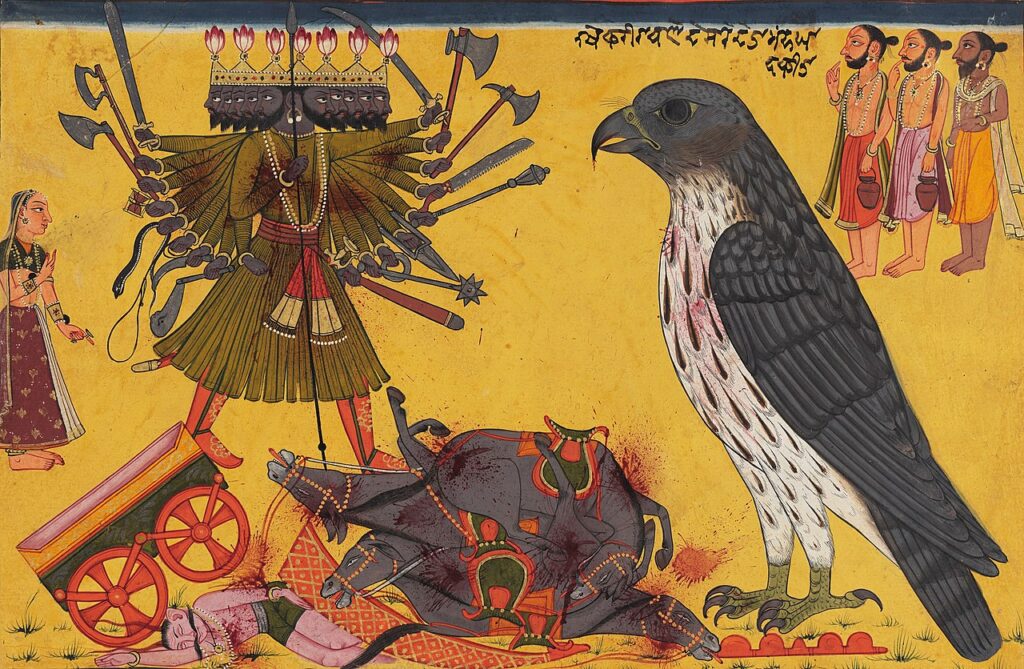
When Jatayu spoke words of righteousness, firm and unyielding, Ravana’s twenty eyes flared with a fury that burned like fire itself. What followed in that vast forest was no ordinary encounter—it rose into a violent, thunderous clash, like storm-driven clouds colliding in a restless sky.
ततो नालीकनाराचैस्तीक्ष्णाग्रैश्च विकर्णिभिः। अभ्यवर्षन्महाघोरैर्गृध्रराजं महाबलः।।
स तानि शरजालानि गृध्रः पत्त्ररथेश्वरः। जटायुः प्रतिजग्राह रावणास्त्राणि संयुगे।।
Without hesitation, the mighty Ravana unleashed a relentless shower of razor-sharp arrows and deadly weapons upon the king of vultures. Yet Jatayu did not falter. He faced every strike, every piercing weapon, with unwavering courage, receiving the assault as one who had already chosen duty over life.
तस्य तीक्ष्णनखाभ्यां तु चरणाभ्यां महाबलः।
चकार बहुधा गात्रे व्रणान्पतगसत्तमः।।
अथ क्रोधाद्धशग्रीवो जग्राह दश मार्गणान्।
मृत्युदण्डनिभान्घोरान्छत्रुमर्दनकाङ्क्षया।।
Then, with his sharp talons and immense strength, Jatayu struck back. He tore into Ravana’s body, wounding him across many parts with fierce precision. Enraged beyond measure, Ravana seized ten dreadful darts—terrible as the very staff of death—intent on crushing his defiant opponent.
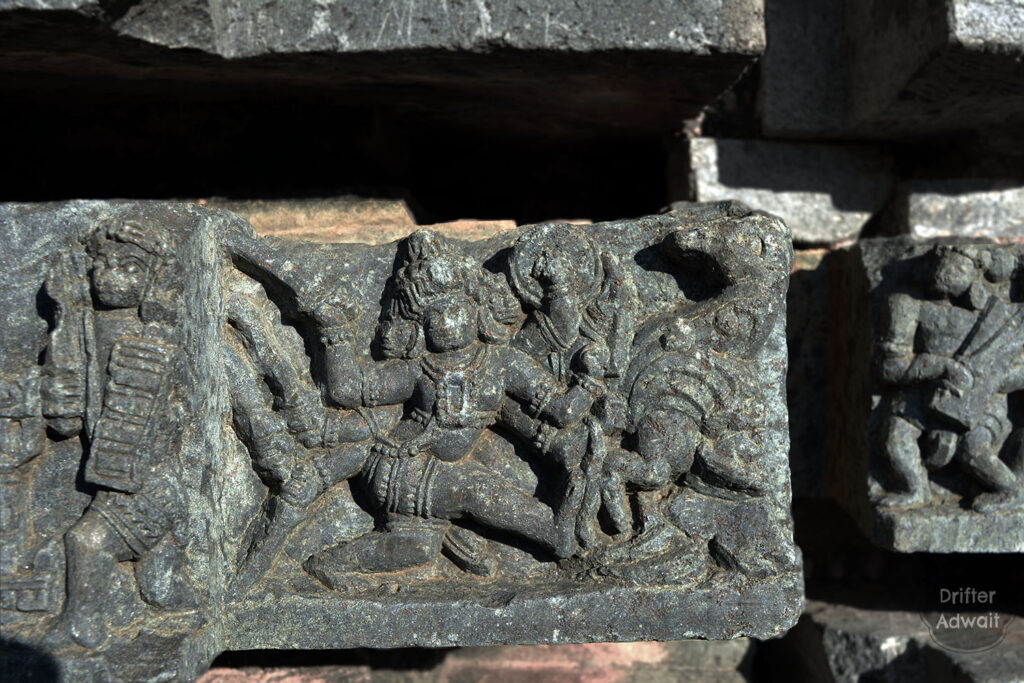
ततोऽस्य सशरं चापं मुक्तामणिविभूषितम्।
चरणाभ्यां महातेजा बभञ्ज पतगेश्वरः।।
ततोऽन्यद्धनुरादाय रावणः क्रोधमूर्छितः।
ववर्ष शरवर्षाणि शतशोऽथ सहस्रशः।।
शरैरावारितस्तस्य संयुगे पतगेश्वरः।
कुलायमुपसम्प्राप्तः पक्षीव प्रबभौ तदा।।
In a dazzling display of strength, the radiant lord of birds shattered Ravana’s jewel-studded bow with his feet. But Ravana, consumed by blinding rage, seized another and unleashed torrents of arrows—hundreds, then thousands.
Encircled by this storm of weapons, Jatayu stood firm, shining amidst the chaos like a bird returning to its nest—resolute, purposeful, unafraid.
स तानि शरवर्षाणि पक्षाभ्यां च विधूयच। चरणाभ्यां महातेजा बभञ्जास्य महद्धनुः।।
तच्चाग्निसदृशं दीप्तं रावणस्य शरावरम्। पक्षाभ्यां स महावीर्यो व्याधुनोत्पतगेश्वरः।।
Even as the arrows rained down upon him, Jatayu swept them aside with the force of his wings. With his claws, he broke Ravana’s great bow once again, and with unyielding valor, he tore apart the demon’s blazing armour—armour that glowed like fire itself.
वरं त्रिवेणुसम्पन्नं कामगं पावकार्चिषम्। मणिहेमविचित्राङ्गं बभञ्ज च महारथम्।।
पूर्णचन्द्रप्रतीकाशं छत्रं च व्यजनैस्सह। पातयामास वेगेन ग्राहिभी राक्षसैस्सह।।
सारथेश्चास्य वेगेन तुण्डेनैव महच्छिरः। पुनर्व्यपाहरच्छ्रीमान्पक्षिराजो महाबलः।।
With unstoppable force, Jatayu destroyed Ravana’s magnificent chariot—resplendent with gold and gems, blazing like fire, and capable of moving at will. He tore down the royal parasol that shone like the full moon, along with the attendants who held it. Then, with a swift and brutal strike of his beak, the mighty king of birds shattered the head of Ravana’s charioteer.
स भग्नधन्वा विरथो हताश्वो हतसारथिः। अङ्केनादाय वैदेहीं पपात भुवि रावणः।।
दृष्ट्वा निपतितं भूमौ रावणं भग्नवाहनम्। साधुसाध्विति भूतानि गृध्रराजमपूजयन्।।
परिश्रान्तं तु तं दृष्टवा जरया पक्षियूथपम्। उत्पपात पुनर्हृष्टो मैथिलीं गृह्य रावणः।।
With his bow shattered, chariot destroyed, beasts slain, and charioteer gone, Ravana fell to the ground, still clutching Vaidehi in his arms. For a fleeting moment, the world itself bore witness—beings everywhere praised Jatayu, hailing his valor with cries of “Well done, well done.”
But time is merciless even to the brave. Seeing the aged king of birds exhausted from the battle, Ravana seized his moment. Rising again with cruel satisfaction, he took Sita and ascended once more into the sky.
विददार नखैरस्य तुण्डं पृष्ठे समर्पयन्।। केशांश्चोत्पाटयामास नखपक्षमुखायुधः।
जटायुस्तमभिक्रम्य तुण्डेनास्य खगाधिपः।। वामबाहून्दश तदा व्यपाहरदरिन्दमः।
सञ्छिन्नबाहोस्सद्यैव बाहवस्सहसाभवन्।। विषज्वालावलीयुक्ता वल्मीकादिव पन्नगाः।
Yet Jatayu was not done. Summoning the last reserves of his fading strength, he attacked once more—tearing into Ravana with claws, wings, and beak, ripping his flesh and wrenching out his hair. In a moment of astonishing ferocity, he severed Ravana’s ten left arms. But as they fell, they rose again instantly—like serpents bursting forth from anthills, blazing with venomous fire.
तस्य व्यायच्छमानस्य रामस्यार्थे स रावणः।। पक्षौ पार्श्वौ च पादौ च खड्गमुद्धृत्य सोऽच्छिनत्।
स च्छिन्नपक्षस्सहसा रक्षसा रौद्रकर्मणा।। निपपात हतो गृद्रो धरण्यामल्पजीवितः।
तं दृष्ट्वा पतितं भूमौ क्षतजार्द्रं जटायुषम्।। अभ्यधावत वैदेही स्वबन्धुमिव दुःखिता।
At last, as Jatayu continued to fight for Rama’s cause with unwavering devotion, Ravana drew his sword. With brutal finality, he severed the bird’s wings and feet. Struck down, grievously wounded and soaked in blood, the noble vulture fell to the ground; his life slipping away, but his purpose fulfilled.
Seeing him fallen, broken yet magnificent, Sita ran toward him in anguish, as one would rush to a beloved kinsman in his final moments.
Echoes of This Story in Stone
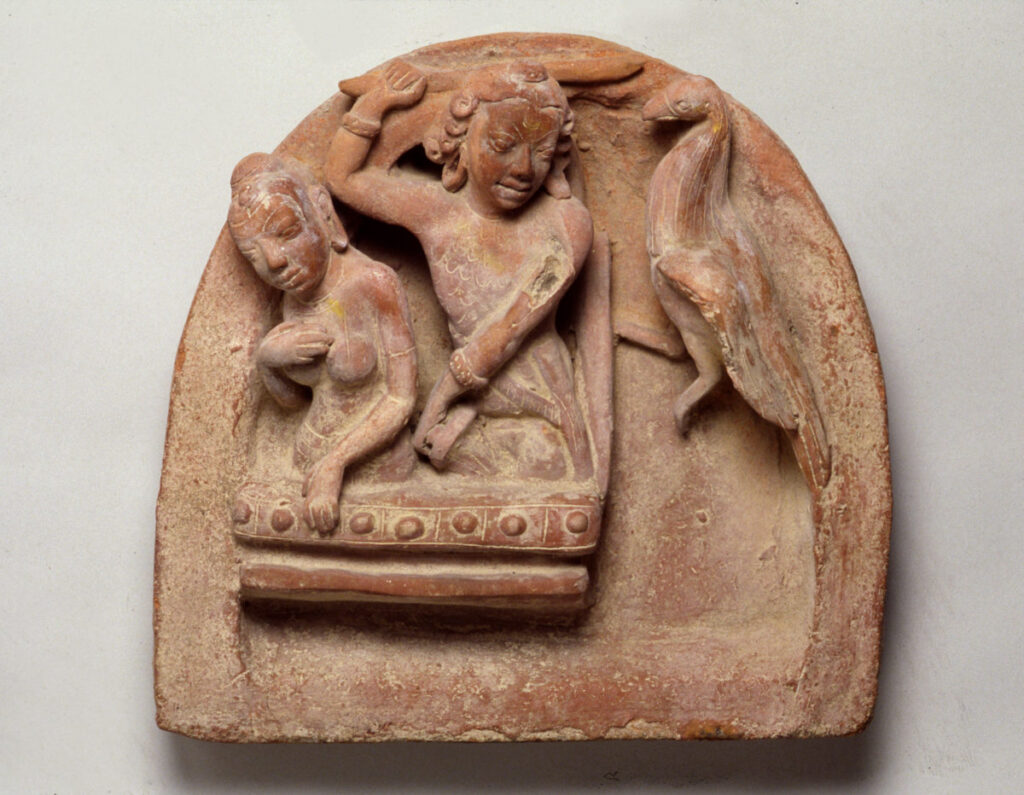
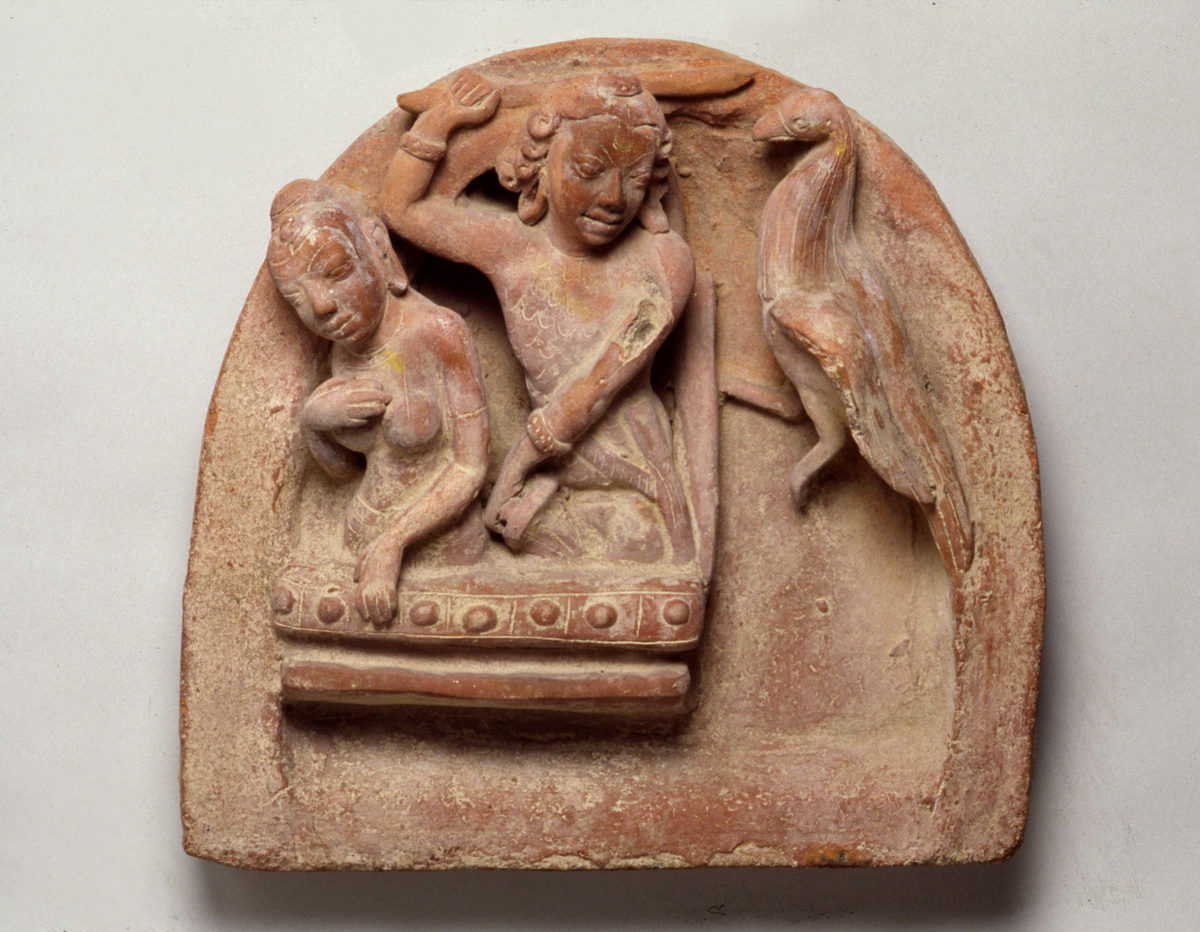
Sculpture One: This is an exquisite terracotta figurine dating back to the 4th or 5th century CE, originating from Uttar Pradesh, depicting Jatayu vs Ravana fight. On the right, Jatayu is depicted attacking Ravana with his talons. Ravana has raised his sword against him, while to the side, Sita stands with her hand placed over her heart, expressing her grief. The sculptor has masterfully captured the drama of this dynamic scene—depicting the bird’s slightly tilted neck and sharp beak, the cruel expression on Ravana’s face, and the sorrow etched upon Sita’s countenance.

Sculpture Two: This sculpture of Jatayu vs Ravana adorns the Rama Temple situated in front of the Palasdev Temple, located within the reservoir of the Ujani Dam. Here, Ravana is depicted standing tall with five heads and ten arms, wielding an array of weapons including a mace, shield, sword, thunderbolt, arrows, and a noose. In a depiction true to the Ramayana narrative, Jatayu is shown attacking Ravana’s left arms with his sharp talons, while the ten-headed demon appears to have seized the tail of this majestic bird in his left hand. In his upper-left hand, he is seen holding Sita captive—much as one might hold a bird confined within a cage. One cannot help but offer heartfelt admiration for the sculptor’s creative vision in this piece.
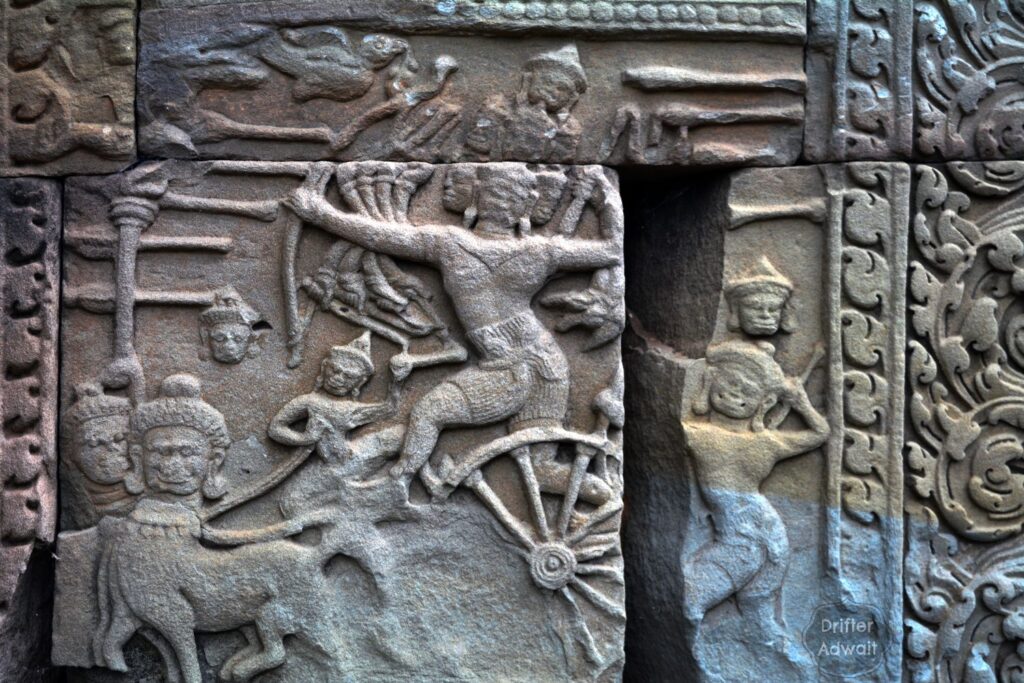
Baphuon Temple, 11th Century, Cambodia.
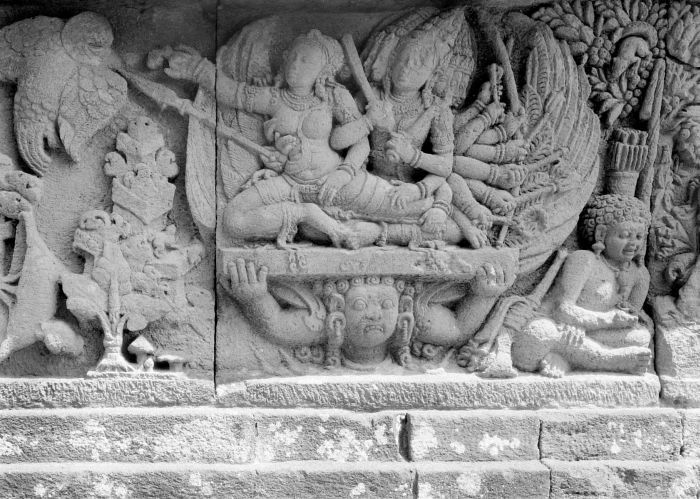
Sculpture Three: This sculpture is found on the Baphuon Temple, built in Cambodia during the 11th century. Here, Ravana is depicted standing in his chariot, fighting with fierce intensity. An intriguing detail is that, unlike typical depictions where Ravana’s heads are arranged side-by-side, here they appear stacked vertically—one atop the other—reminiscent of a Dahi Handi formation; a visual that inevitably brings to mind the film Adipurush.
It is also worth noting that, consistent with the descriptions found in the Valmiki Ramayana, Ravana’s chariot is depicted here as being drawn by mules with demonic faces. It is truly a marvel—is it not?—that an epic poem could travel thousands of kilometers beyond India’s borders, preserving such intricate details, despite the complete absence of any printing technology.
Why Jatayu’s Story Endures
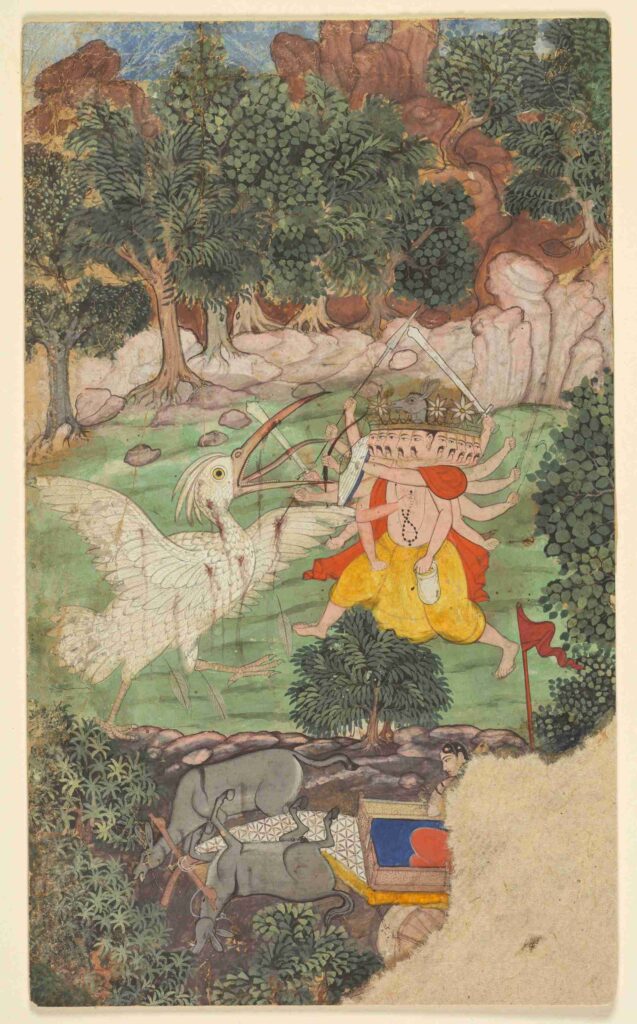

Jatayu’s valor is not merely an episode. It is a standard against which courage itself is measured.
He knew the odds. He felt the weight of age. He faced a king of immense power. And yet, he chose to rise, to resist, and to fight; not for victory, but for what was right.
That is why this moment in the Ramayana does not fade. It travels across lands, across centuries, and across cultures—carried not by force, but by meaning.
Jatayu did not win the battle.
But in choosing to stand when retreat was easier, he ensured that he would never be forgotten.
Frequently Asked Questions About Jatayu vs Ravana
Who was Jatayu in the Ramayana?
Jatayu was a noble vulture and a close ally of King Dasharatha. In the Ramayana, he sacrifices his life trying to rescue Sita from Ravana. He is not merely a witness to the events, but an active guardian of dharma, stepping in when no one else was present to defend her. In many ways, his role transforms him from a secondary character into one of the epic’s most morally luminous figures.
Why did Jatayu fight Ravana?
Jatayu vs Ravana is more than just a fight between two characters in the epic. Jatayu fought Ravana to protect Sita and uphold dharma, even though he knew he was old and unlikely to win. His decision was not driven by hope of victory, but by an unshakable sense of duty and righteousness. It is this conscious choice to act despite certain defeat, that elevates his courage to something timeless.
Did Jatayu defeat Ravana?
Jatayu did not ultimately defeat Ravana, but he destroyed his chariot, wounded him severely, and delayed him, displaying an extraordinary feat against such a powerful enemy.
For a brief moment, he even brought Ravana down to the ground, disrupting his flight and forcing him into a vulnerable position. Though the battle was lost, the resistance he offered was profound and consequential.
What does Jatayu symbolize?
Jatayu represents selfless courage, duty, and the willingness to stand for righteousness regardless of the outcome. He embodies the idea that true heroism lies not in victory, but in the resolve to confront injustice without hesitation. His story endures because it speaks to a deeper moral strength that transcends success or failure.
Where can we see Jatayu in sculptures?
Depictions of Jatayu’s battle with Ravana appear across India and even in Southeast Asia. These sculptures capture both the intensity of the battle and the emotional weight of his sacrifice, preserving the story in visual form across regions and centuries.
References:
1. ShrimadValmikiya Ramayan, First Volume, With Hindi Translation, Gita Press Gorakhpur.
2. Valmiki Ramayana, Developed and Maintain by IIT Kanpur, India.