When we speak of India’s civilizational influence, we often think of texts, philosophies, and spiritual ideas. But sometimes, history speaks most powerfully through stone. Deep inside the Angkor region of Cambodia stands Baphoun, a monumental temple that quietly tells the story of how Indian thought, religion, and architecture travelled far beyond the Indian subcontinent—without force, without erasure, and without losing its soul.
Baphuon is not just a Cambodian monument. It is a shared cultural memory, shaped by Indian cosmology and Khmer creativity. Though Angkor Wat is far more famous today, Baphoun reveals a deeper and older layer of Angkor’s history—one that connects Cambodia directly with India’s spiritual and philosophical heritage.
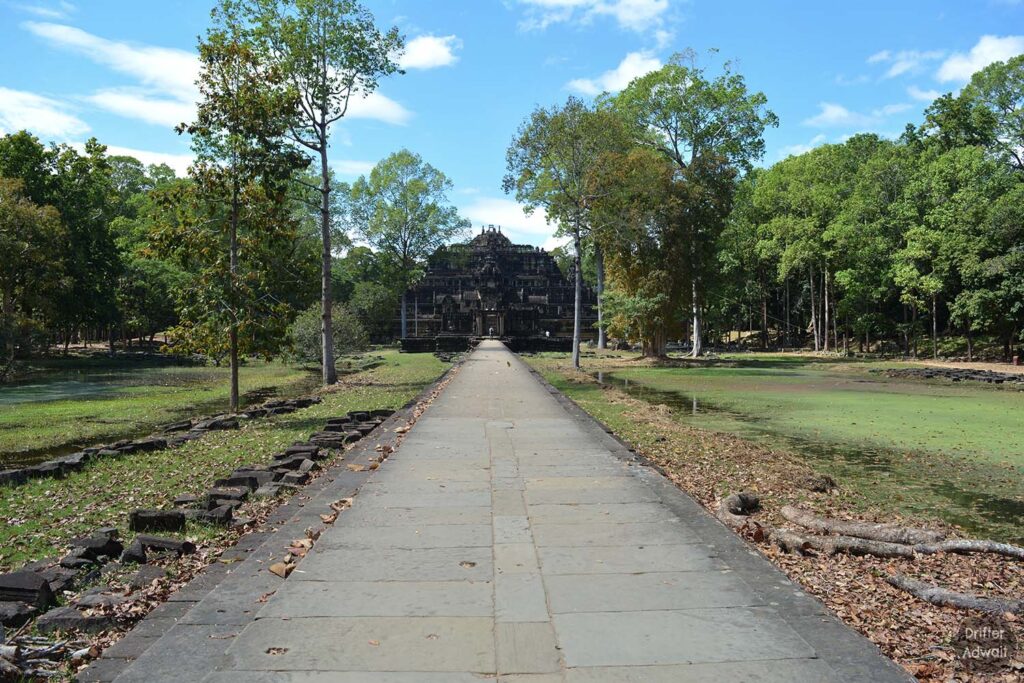
King Suryavarman and the Indian Idea of Sacred Kingship
In the eleventh century, Cambodia was ruled by King Suryavarman (1), a powerful and respected monarch. Historical inscriptions describe him not only as a strong ruler but also as a deeply religious man, devoted to Lord Shiva. Records suggest that he was knowledgeable in the six Vedangas, the traditional auxiliary sciences of the Vedas—grammar, astronomy, ritual, phonetics, etymology, and meter.
This combination of political power and spiritual discipline reflects an Indian idea of kingship: the ruler as the protector of dharma. For King Suryavarman, religion, philosophy, and governance were not separate. They were deeply connected.
It was this worldview that led to the creation of Baphuon.
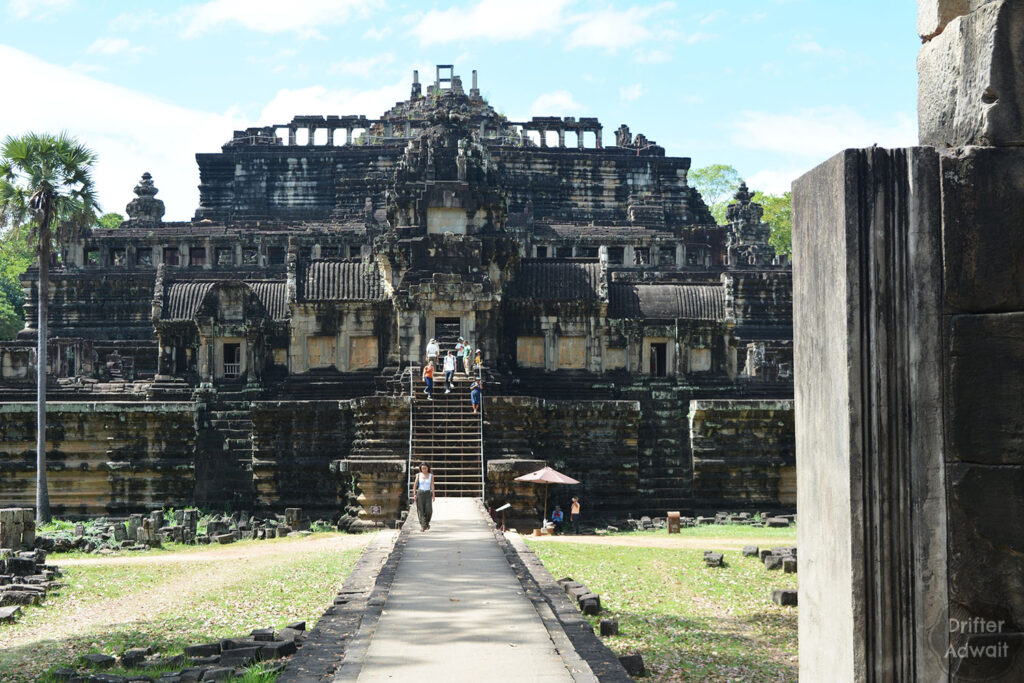
Baphuon as Mount Meru: The Universe in Stone
In Indian tradition, gods do not live on flat land. They reside on Mount Meru, the sacred cosmic mountain at the center of the universe. King Suryavarman strongly believed that the home of the gods must rise higher than human dwellings.
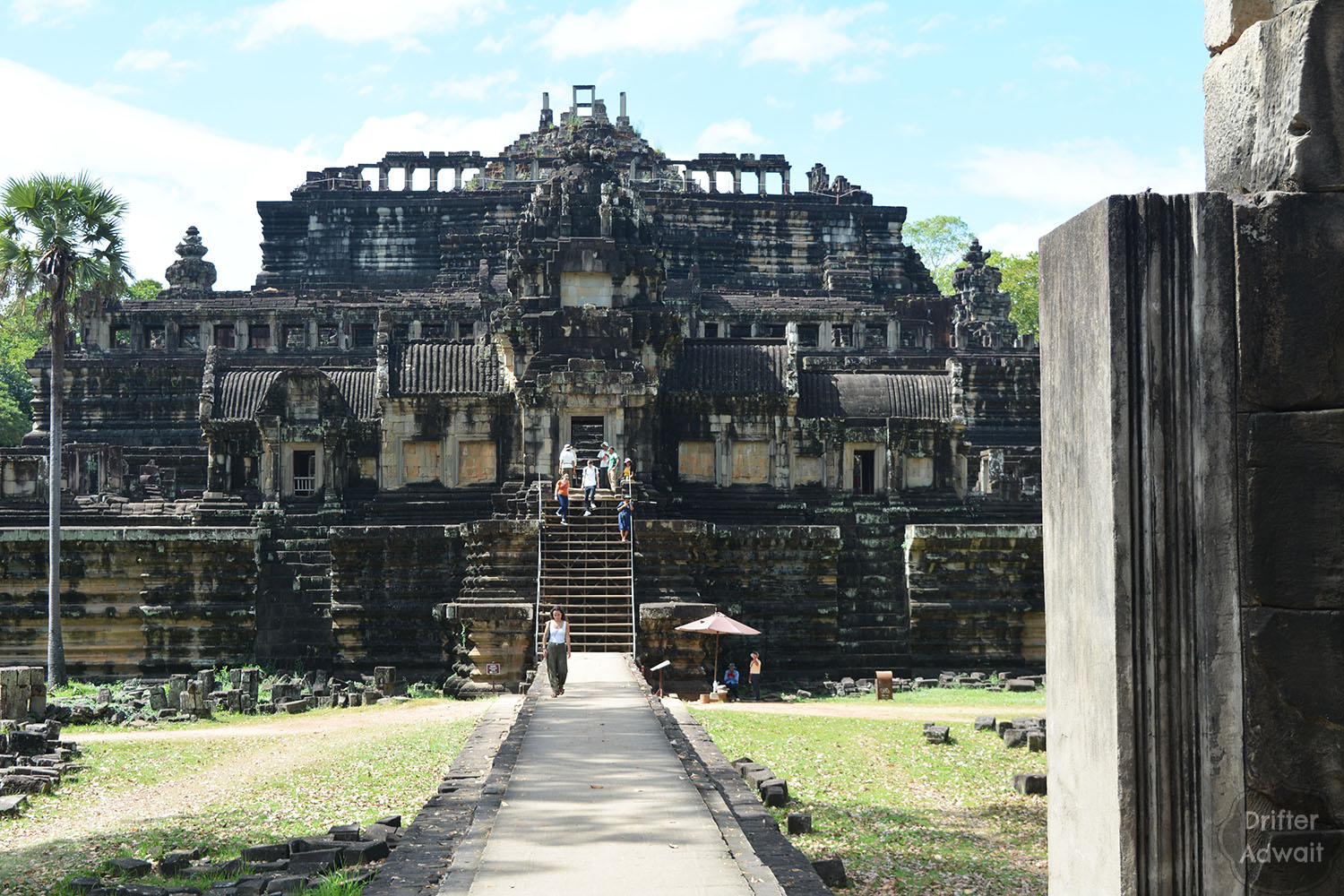
Inspired by this idea, around a thousand years ago, he ordered the construction of a massive three-tiered Hindu pyramid in the heart of his capital city. This structure—later known as Baphuon—was designed as a man-made Mount Meru.
At the very top stood the garbhagriha, the sanctum sanctum, crowned by a tall tower (now lost). Inside it, the king installed a golden Shiva linga, dedicating the entire monument to Shaivism.
Baphuon was not just a temple. It was the spiritual and political center of Angkor, a place where divine order and royal authority met.

India and Cambodia: Friendship Across the Seas
The story of Baphuon cannot be separated from the wider Indian Ocean world. During this period, India and Southeast Asia were closely connected through trade, diplomacy, and shared culture.
King Suryavarman maintained strong relations with Rajendra Chola I, the great Chola emperor of South India. Historical sources record that the Khmer Empire received military support from the Cholas during conflicts with the kingdoms of Tamralinga and Srivijaya.
These joint efforts changed the political balance of Southeast Asia. Parts of today’s Indonesia and Singapore came under Chola influence, strengthening India’s cultural presence in the region.
These were not colonial conquests. Instead, Indian ideas—language, religion, temple design, epics, and rituals—flowed naturally, were respected, and were creatively adapted by local cultures. Baphoun stands as one of the finest results of this peaceful exchange.

Design and Experience of Baphuon
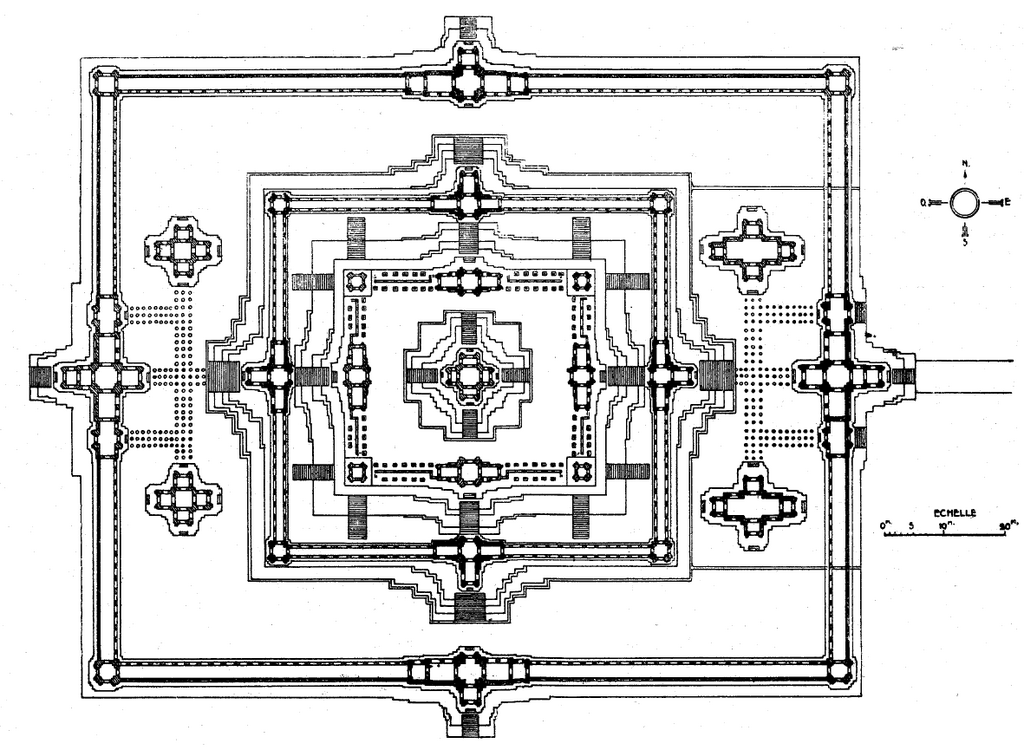
Baphuon is carefully planned, like a spiritual Yantra.
– The temple faces all four cardinal directions, following Indian cosmic principles.
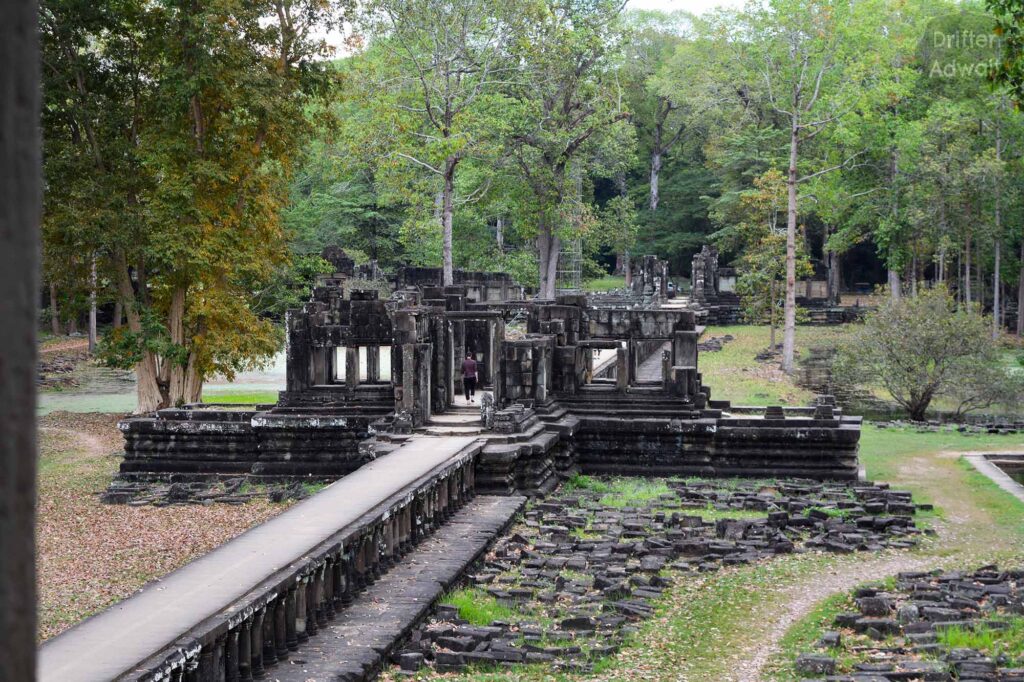
– A long stone causeway from the east slowly leads visitors away from the everyday world and into a sacred space.
– Near the entrance are two library structures, once used to store religious texts, mantras, and philosophical knowledge.
As one moves upward through the three tiers, the experience becomes quieter and more reflective. Each level has entrances aligned with the directions, and the carvings become more refined.
Even today, walking through Baphuon feels like a journey, not just a visit.
Ramayana and Mahabharata in Cambodian Stone
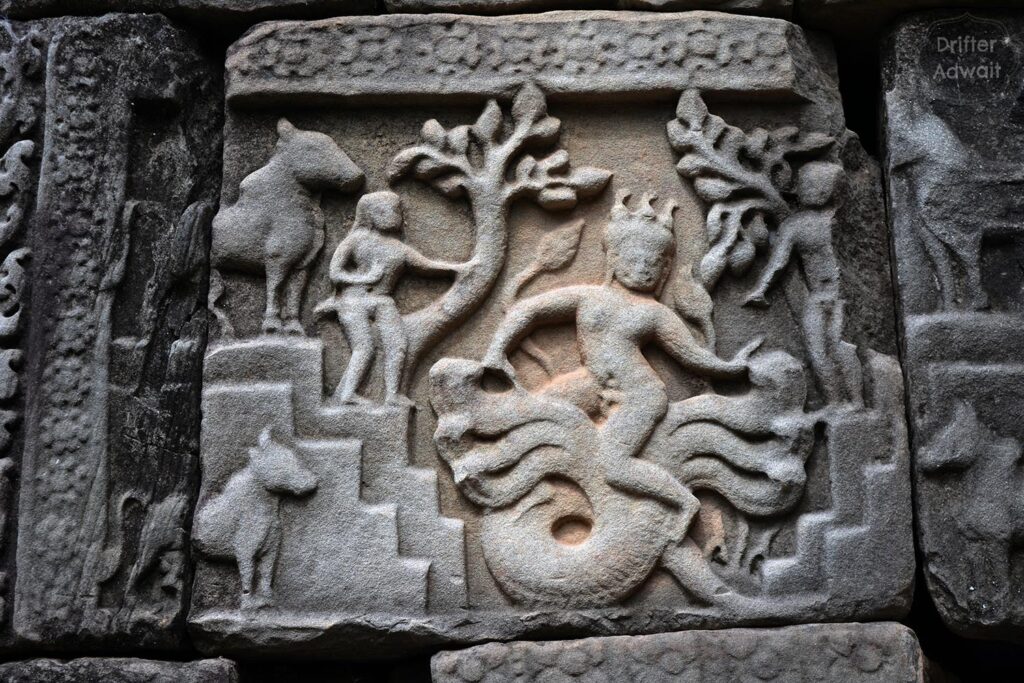
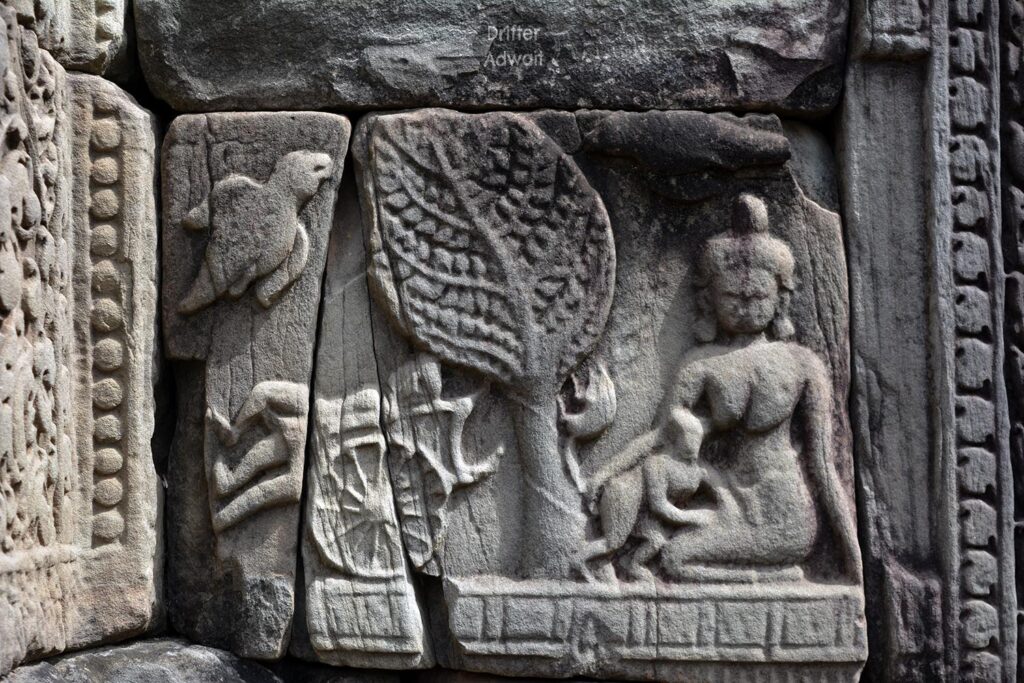
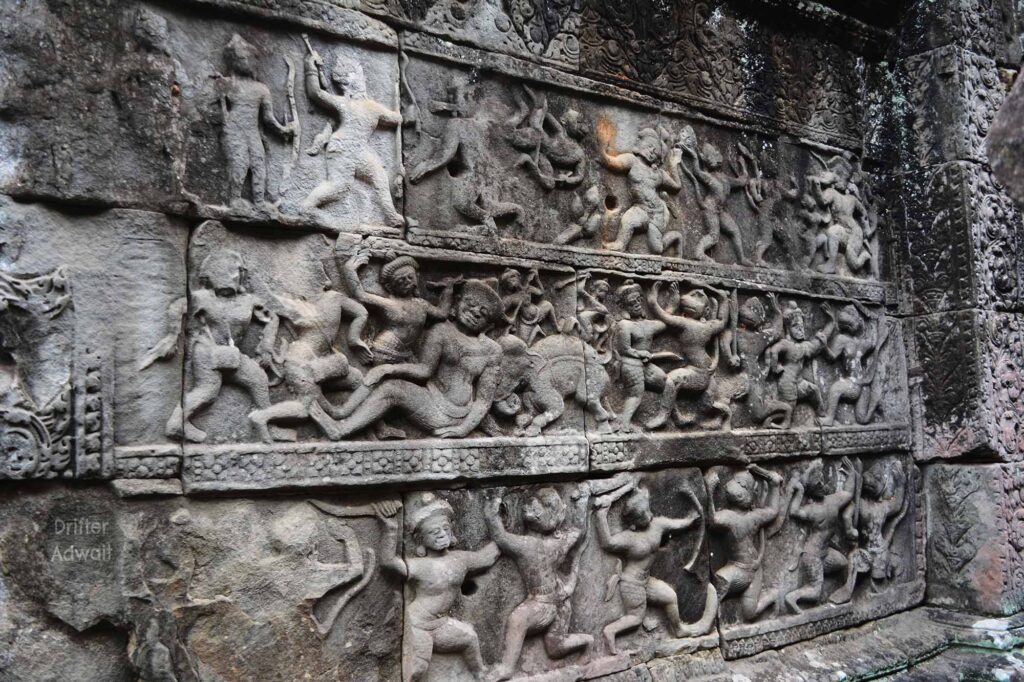
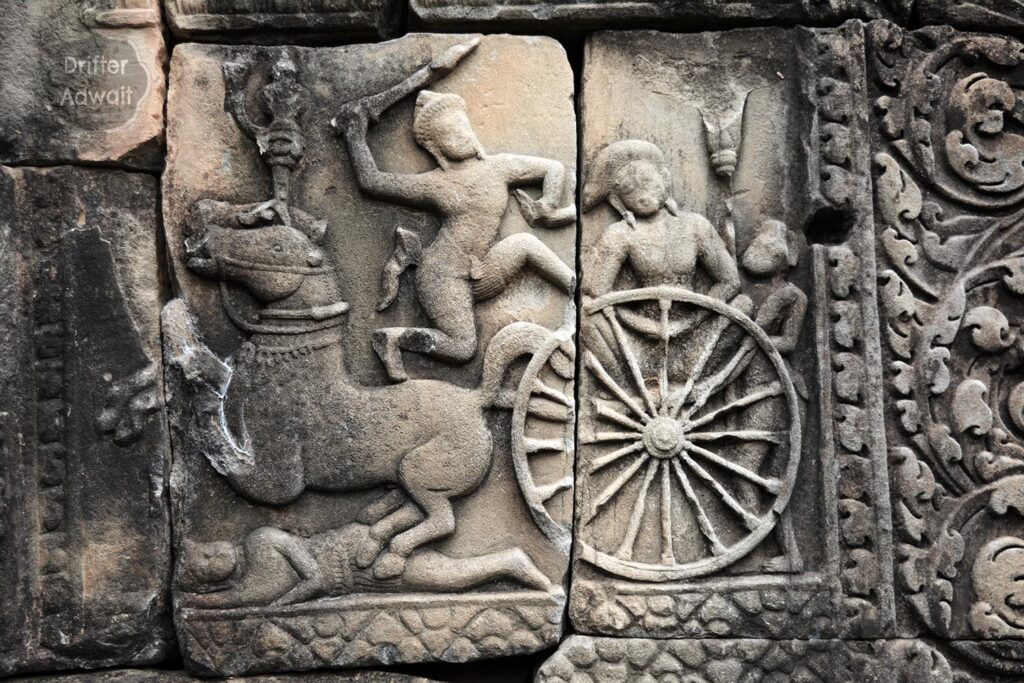
Pic 1: Krishna Slaying Kalia Naga
Pic 2: Krishna Slaying Shakatasura, Putana and Bakasura
Pic 3: Kumbhakarna Episode, Mahabharata
Pic 4: Drushtadyumna slaying meditating Guru Drona, Mahabharata
Although Baphuon is now a Buddhist site, its Hindu roots are still clearly visible.
Carved into doorways and galleries are scenes from the Ramayana and Mahabharata. Sanatana gods, sages, celestial beings, and epic battles appear across the walls. These stories were not foreign to Cambodia. They were fully absorbed into Khmer culture.
This shows the depth of India’s cultural influence. The epics were not imposed; they were embraced, retold, and carved into stone with local artistic styles.
From Shiva to Buddha: A Gentle Transformation

History, however, brings change.
After the death of King Suryavarman around 1050 CE, power passed to later rulers. Over centuries, the Khmer Empire faced political instability. In the fourteenth century, the region fell under the control of the Ayutthaya Kingdom of Thailand.
With new rulers came new religious priorities. Gradually, Theravada Buddhism replaced Hinduism as the dominant faith.
Baphuon was transformed, but not destroyed.
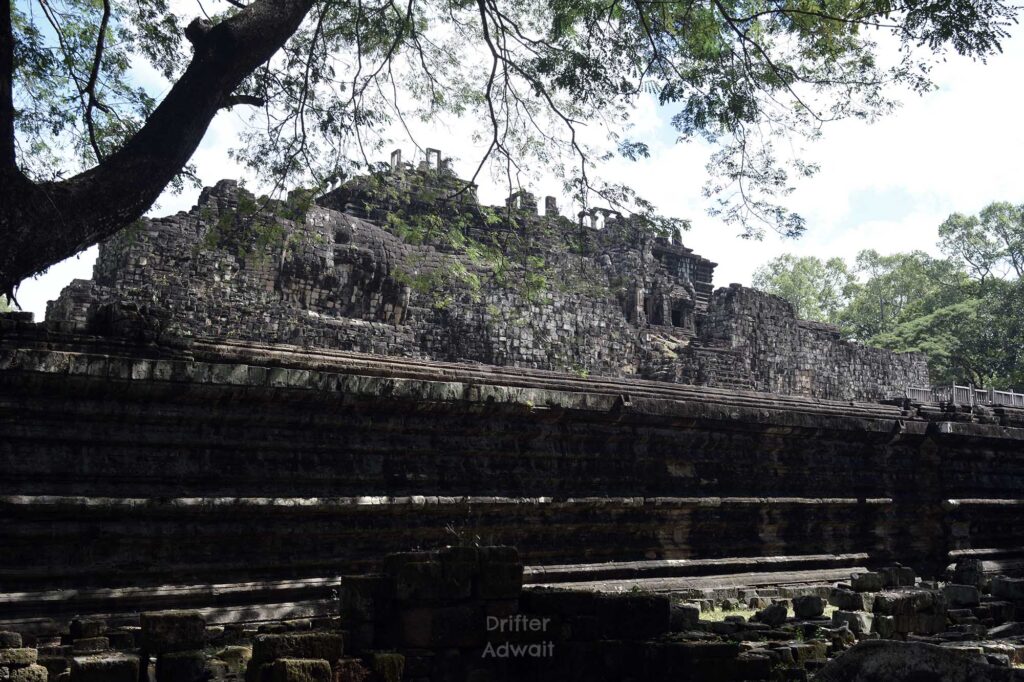
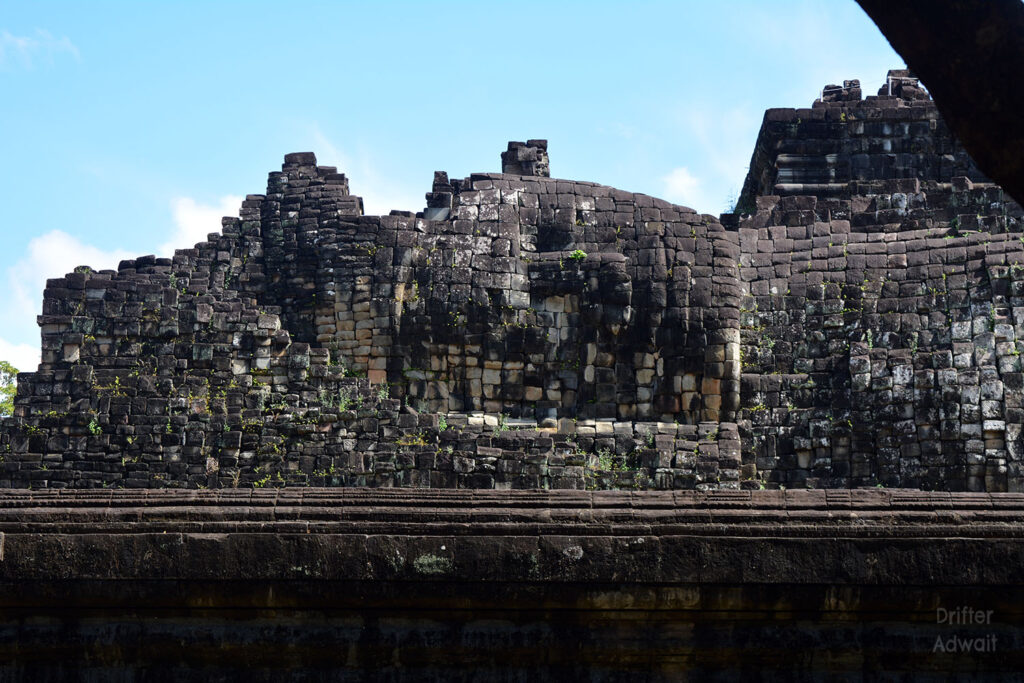
In the sixteenth century, the upper stones of the temple were carefully rearranged to create a massive reclining Buddha in Mahaparinirvana, nearly 70 meters long. The entire western side of the pyramid now forms the body of the Buddha.
This is one of the most extraordinary features of Baphuon:
a Hindu Shaivite pyramid turned into a Buddhist sacred image, without wiping out its past.
A Temple with Two Souls

Today, Baphuon holds two spiritual identities:
– Its Shaivite origin, seen in its structure, layout, and carvings
– Its Buddhist present, expressed through the reclining Buddha
Rather than clashing, these identities coexist peacefully. This reflects a deeper Indian idea—that truth can take many forms, and that spiritual traditions can transform without violence.
Standing at the top of Baphuon, where the sanctum once stood, one feels a deep silence. The tower is gone, but the space remains powerful. From here, the entire Angkor region is visible, and one understands why this place was chosen for the divine.
The Long and Difficult Restoration of Baphuon

Baphuon nearly collapsed forever.
When French archaeologists first cleared the site in 1908, they found the structure badly damaged. Poor original construction, heavy sand fill, rainwater seepage, and centuries of alteration had weakened it. Major collapses occurred in 1943 and 1959.
The restoration became the longest and most complex project in Angkor’s history.
Work stopped during war (1971–1995), and many original plans were destroyed. When restoration resumed, the temple had become a giant three-dimensional puzzle, with thousands of stones scattered across the forest.
Finally, after decades of effort, Baphuon was reopened in 2011, saved from complete ruin. Today, it stands once again as a proud part of Angkor’s landscape.
Timeline of Baphuon


11th century (c. 1050 CE) – Baphuon constructed as a Shaivite temple under King Suryavarman
13th century – Described by foreign visitors as a shining, possibly bronze-clad monument
14th century – Khmer Empire declines; region taken by Ayutthaya Kingdom
16th century – Temple transformed into a Buddhist site; reclining Buddha added
1908 – Modern archaeological clearing begins
1943 & 1959 – Major structural collapses
1971–1995 – Restoration halted due to war
2011 – Restoration completed; Baphoun reopened to the public
Why Baphuon Matters Today
Baphuon matters today because it tells a different kind of story. It shows that cultural influence does not always come through conquest or control. Sometimes, it grows through sharing. Sometimes, it travels through ideas. The story of Baphoun is shaped by exchange, inspiration, and imagination.
India’s influence in Cambodia did not arrive with armies. It did not come through forced belief. It came through philosophy and religion. It came through sacred texts and stories. It came through art and architecture. Indian ideas offered a foundation. They spoke of Mount Meru. They explained sacred kingship. They described cosmic order and dharma. Khmer society gave these ideas a visible form. Local materials were used. Local skills shaped the work. Local creativity brought it to life. What emerged was not a copy of India. It was something new. It was truly Khmer.
In today’s world, culture is often discussed in terms of conflict or dominance. Baphuon reminds us of another possibility. Civilizations can meet without erasing each other. They can grow richer through contact. Baphuon shows how ideas can cross seas. It shows how they can settle in new lands. It shows how they can respect both their origin and their new home. This gentle exchange is one of the quiet strengths of Indian civilization. Baphuon is a beautiful example of it outside India.
Baphuon also speaks through its setting. It stands slightly away from the busiest parts of Angkor. Trees surround it. The paths are calm. The temple does not overwhelm visitors at first glance. It asks for time. Like an old storyteller, it waits. Those who slow down begin to notice more. They walk along the causeway. They climb the levels. They feel the passing of centuries. Shaivite devotion is still present. Buddhist change is clearly visible. Signs of collapse remain. Restoration has added a new chapter. Each stone seems to remember something.
Within these stones, meaning still lives. One voice comes from India. It speaks of sacred order and ancient stories. It carries spiritual thought and tradition. Another voice belongs to Cambodia. It expresses creativity and local identity. It shapes ideas through its own land and culture. At Baphoun, these voices do not clash. They exist side by side. Together, they give the monument its depth.
That is why Baphuon is more than a monument of the past. It continues to speak today. It offers a lesson for the future. It reminds us that the strongest legacies are not built through force. They last through ideas that travel, adapt, and remain meaningful across time.


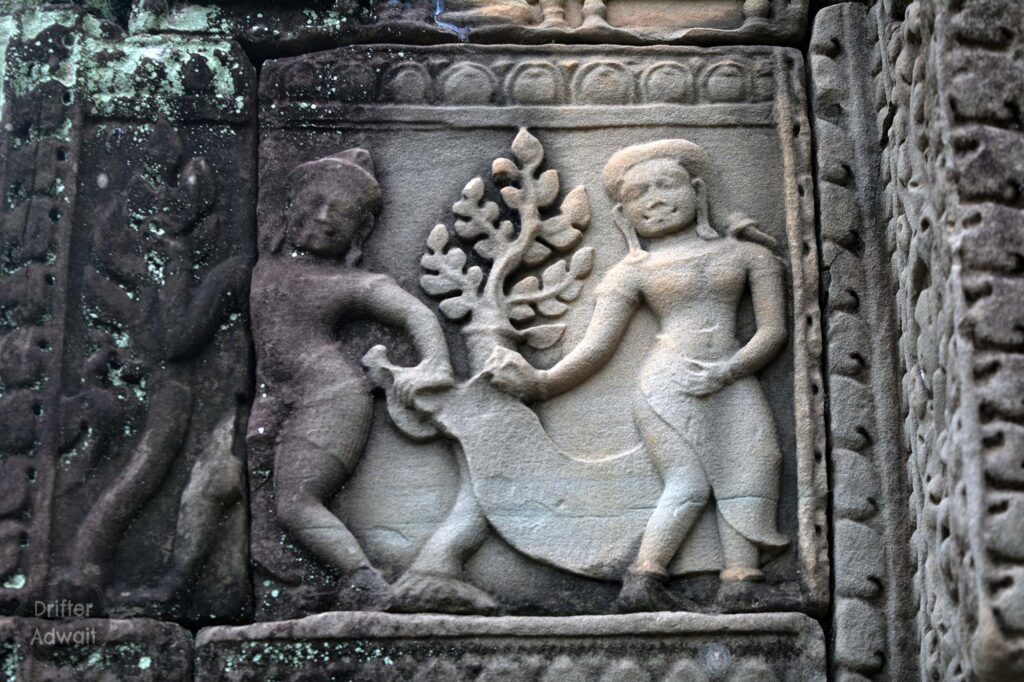


Pic 1: Yudhishthir Playing Dice Game with Duryodhan
Pic 2: Bhishma on Bed of Arrows, Mahabharata

References:
1. First Direct Dating for the Construction and Modification of the Baphuon Temple Mountain in Angkor, Cambodia, Stéphanie Leroy 1,*, Mitch Hendrickson 2, Emmanuelle Delqué-Kolic 3, Enrique Vega 1, Philippe Dillmann 1, Editor: Siân E Halcrow, PMCID: PMC4633138 PMID: 26535895
2. George Coedès; Michael Freeman & Claude Jacques; Charles Higham.
3. APSARA Authority Cambodia