Of Things That Pass and Things That Remain
Much that is made in the world is made in haste. It rises quickly, shines for a moment, and then fades. People cheer it, argue over it, and soon forget it ever existed. This has always been so, though the speed has increased in recent times.
Yet there are other works, quieter and slower in their making, that do not seek attention. They are shaped with care and patience. They endure long after the hands that made them have turned to dust. East Mebon is such a work. It stands far from India, far from its sources of inspiration, and far from the age that gave it birth, yet it still speaks with a steady voice.
The World Before Speed
Long before wires carried voices and screens carried images, there was a world that moved at a gentler pace. In India between the fifth and seventh centuries of the Common Era, there were no machines to preserve words. Writing existed, but memory was the greater storehouse.
In that age, poets shaped language as one shapes stone. They built great epics, measured and balanced, filled with wisdom, devotion, and law. These works were not written for quick applause. They were meant to be remembered, spoken, and passed onward. Each generation became a keeper of the words, guarding them against loss.
That such works survived at all is remarkable. That they traveled far beyond India is more remarkable still.

The Long Eastward Journey
Ideas do not remain bound to their place of origin. Like travelers on ancient roads, they move with traders, priests, and kings. Over time, Indian religion, literature, and philosophy crossed forests and seas and found a home in Southeast Asia.
In the tenth century, the Khmer Empire stood strong in the land now called Cambodia. Its kings ruled with confidence, and their courts were filled with learning. Among them was King Rajendravarman, a ruler who understood that power alone does not last, but memory might.
The Making of a Sacred Island
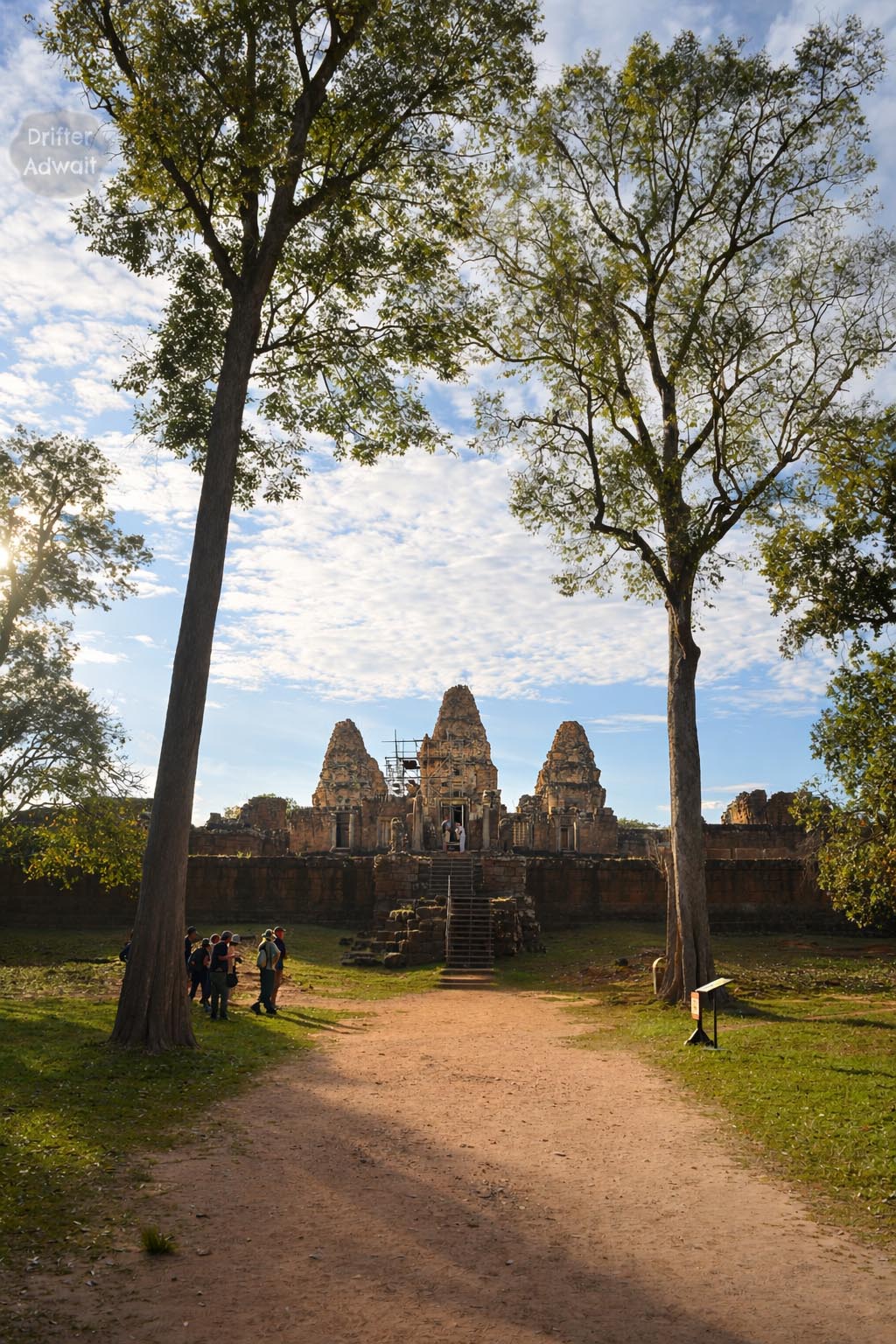
Tenth century Cambodia. King Yashovarman commanded the creation of a vast reservoir, known today as the East Baray. It was a work of great skill and effort, holding a body of water so large that it is difficult even now to imagine its scale. In the middle of the lake, by filling in the area to create a mound, King RajendraVarman, who ascended the throne a few decades after Yashovarman, built a Panchayatan temple in memory of his parents.
Upon this island, a temple was built. In its time, the temple rose from the waters, visible from afar, like a mountain set within a sea. Boats carried priests and visitors to its steps. Four stone landing stages remain, silent witnesses to that vanished world of water.
This temple is known today as East Mebon.

A Temple Raised for Gods and Parents
East Mebon was dedicated to Shiva, the great lord who destroys and renews all things. Yet it was also built in memory of the king’s parents. Its original name was Shrirajendreshvara, a name that bound devotion, lineage, and authority together.
Within the central shrine stood Shiva and Parvati, shaped with features resembling the king’s mother and father. In this way, love and reverence were joined. The mortal and the divine were set side by side, not in confusion, but in harmony.
Order in Stone and Space
Nothing at East Mebon was placed without thought. The temple was aligned carefully with other sacred structures of the realm. To the south stood Pre Rup, the state temple of Rajendravarman. To the west lay Phimeanakas, the palace temple.
These alignments reflected an understanding of the world as ordered and meaningful. The king ruled not as a solitary figure, but as part of a greater pattern that joined land, sky, and sacred law.

The Shape of the Temple
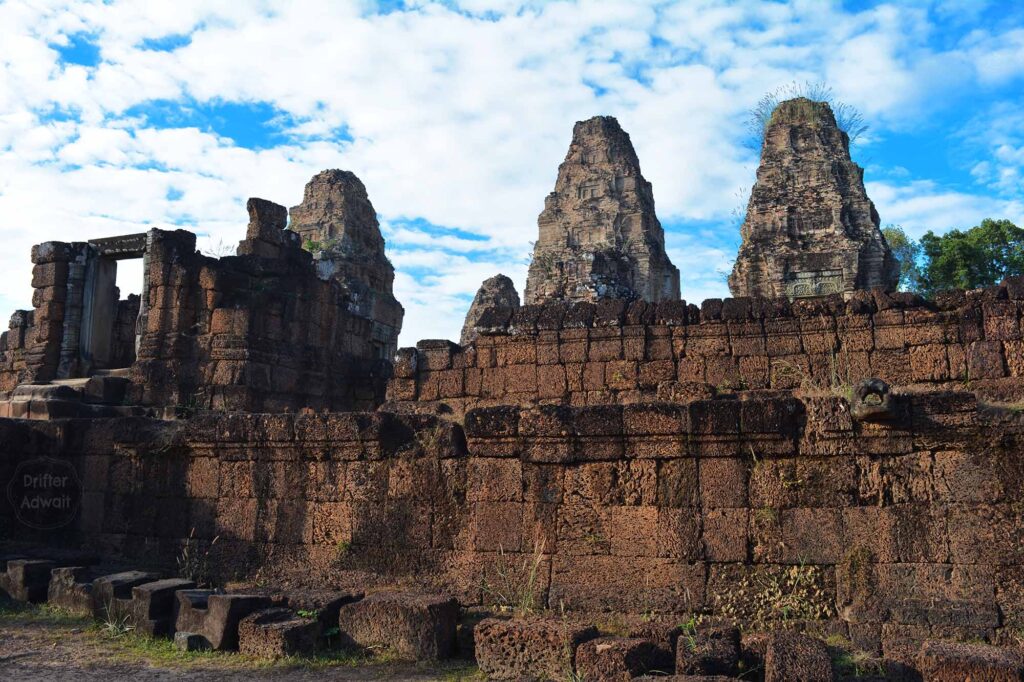
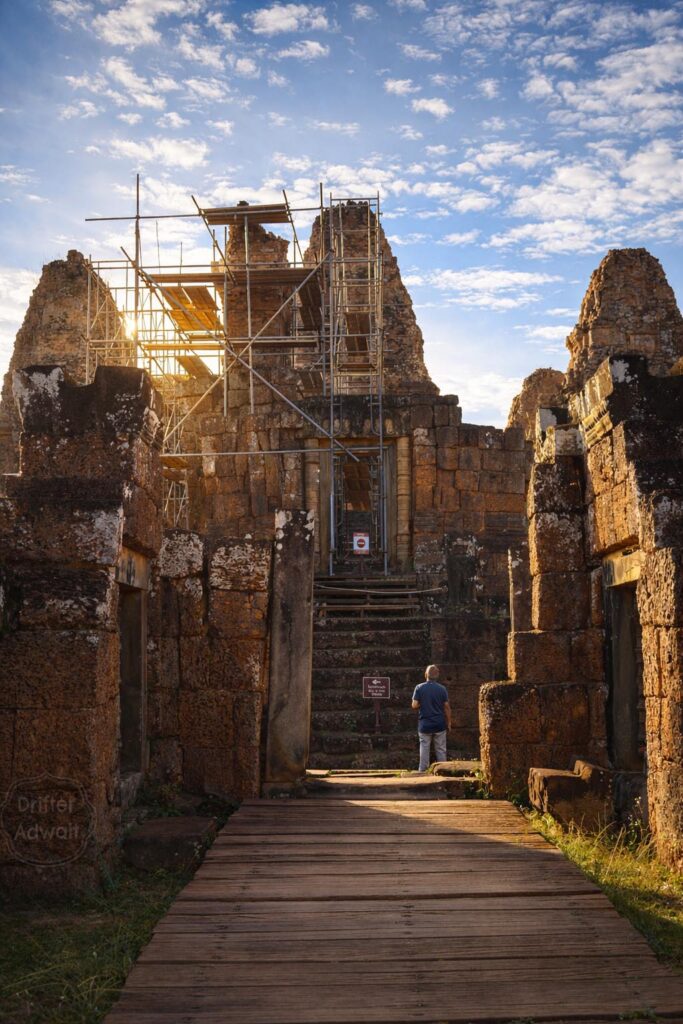
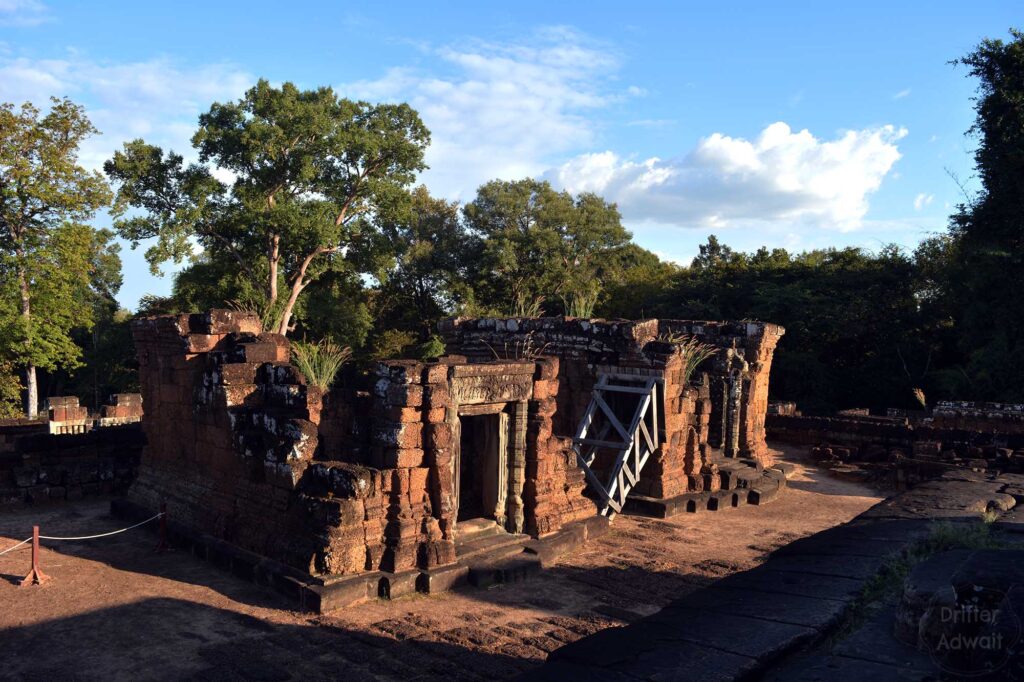
East Mebon was dedicated in the year 953 CE. It rises in three tiers and is enclosed by two walls. The builders used sandstone, brick, laterite, and stucco, choosing strength where strength was needed and refinement where beauty was required.
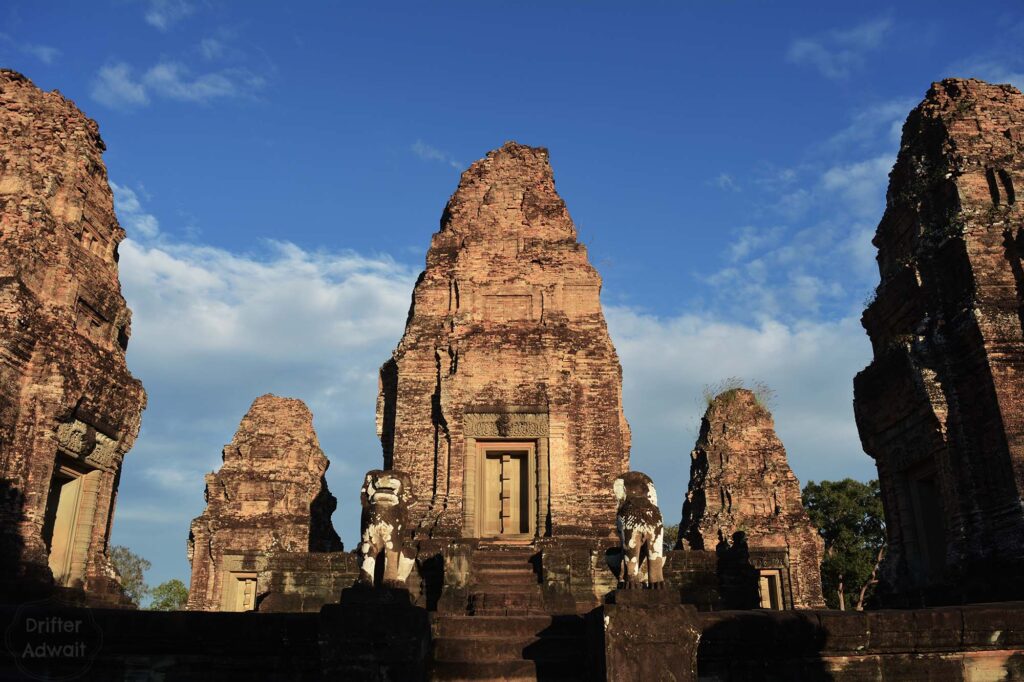
At the summit stands a central tower on a square platform, surrounded by four smaller towers at the corners. Though time has worn away much of the stucco, the bones of the structure remain firm, as if the builders trusted the future to test their work.
Guardians and Sacred Images

At the corners of the lower levels stand great stone elephants and lions, each carved as a free standing guardian. They are massive, unmoving, and enduring. They have watched centuries pass without expression or complaint.
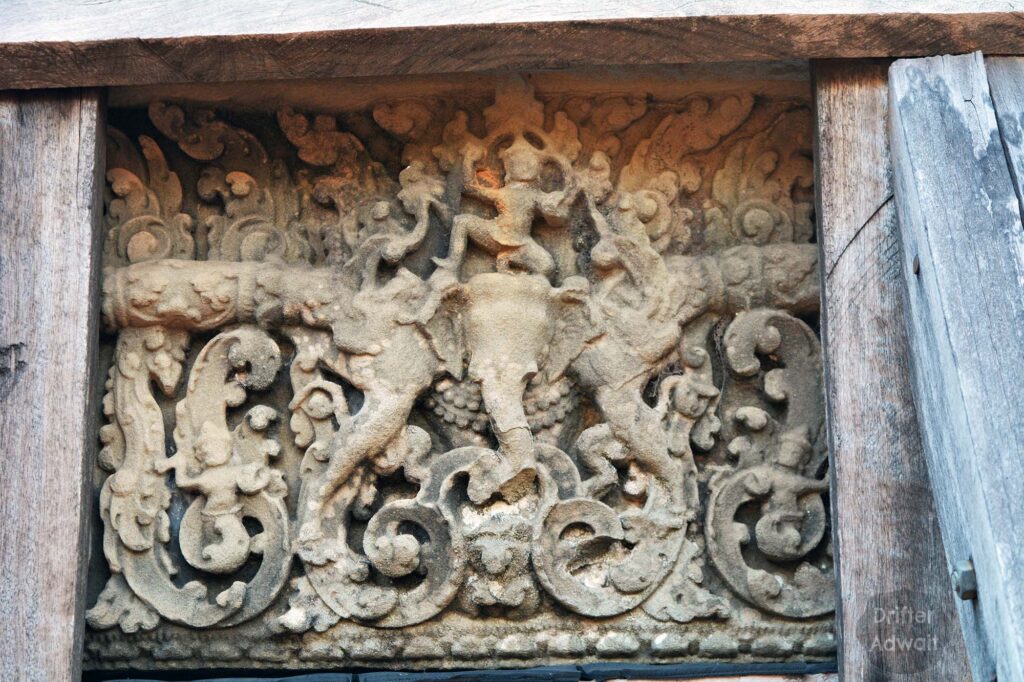
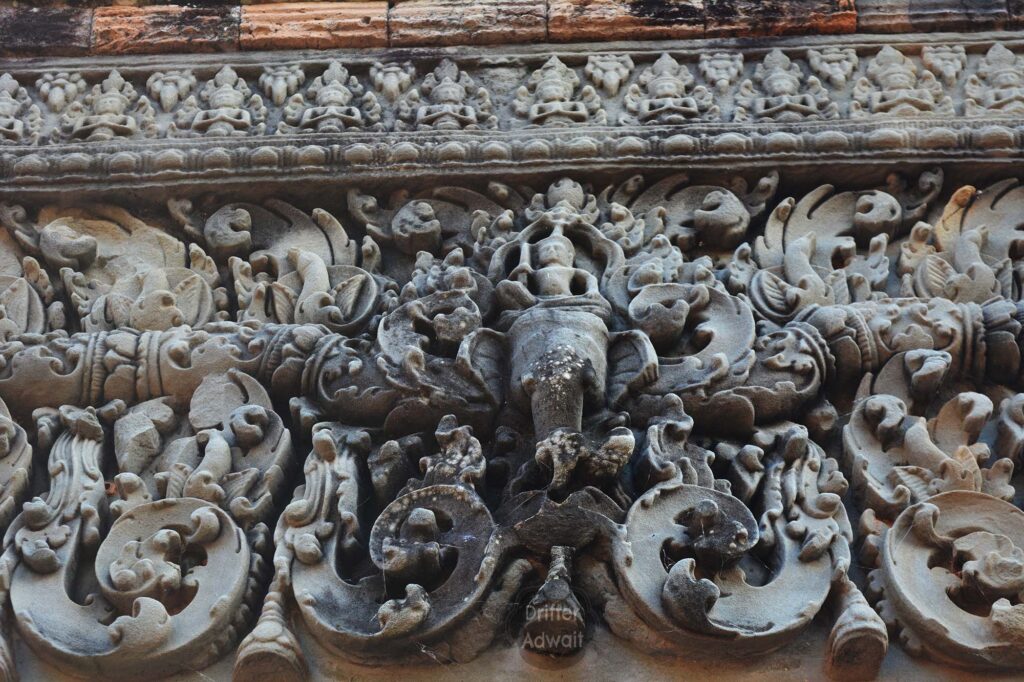
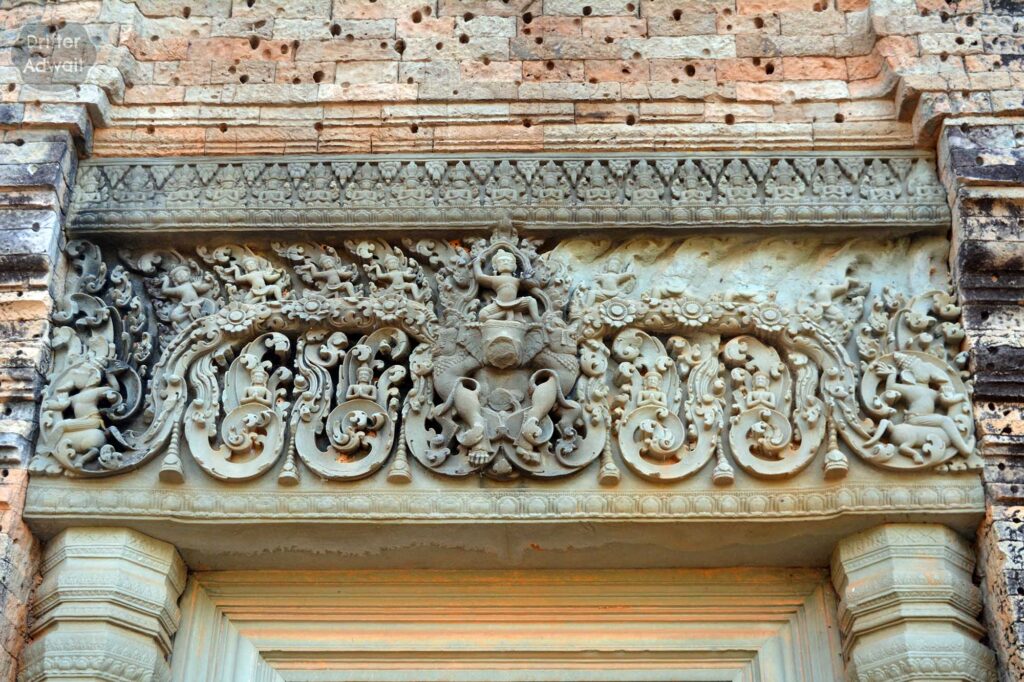
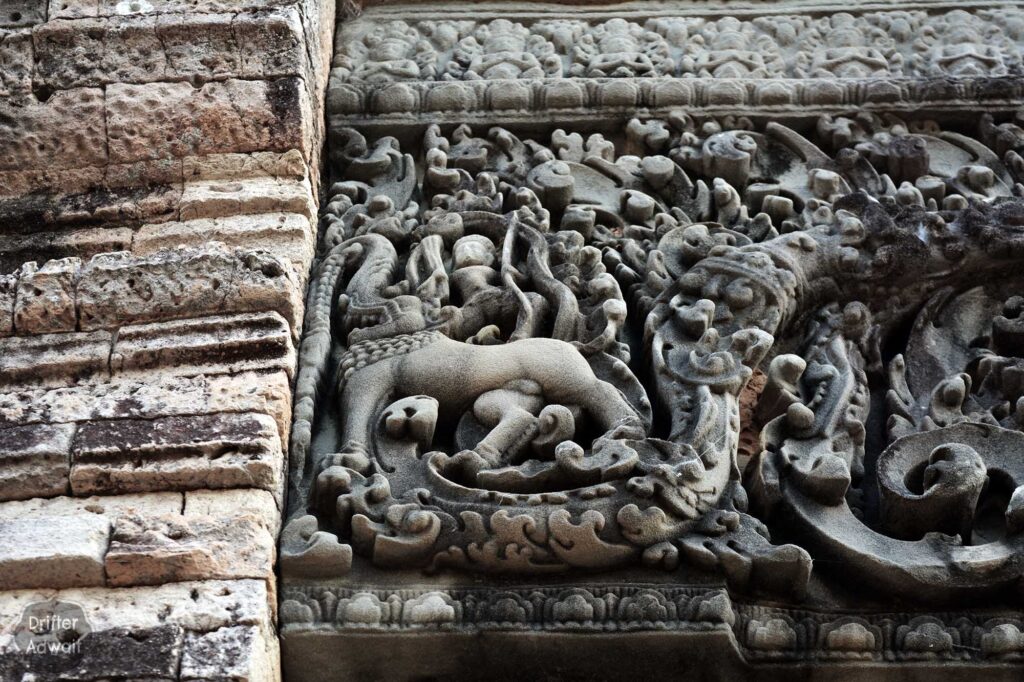
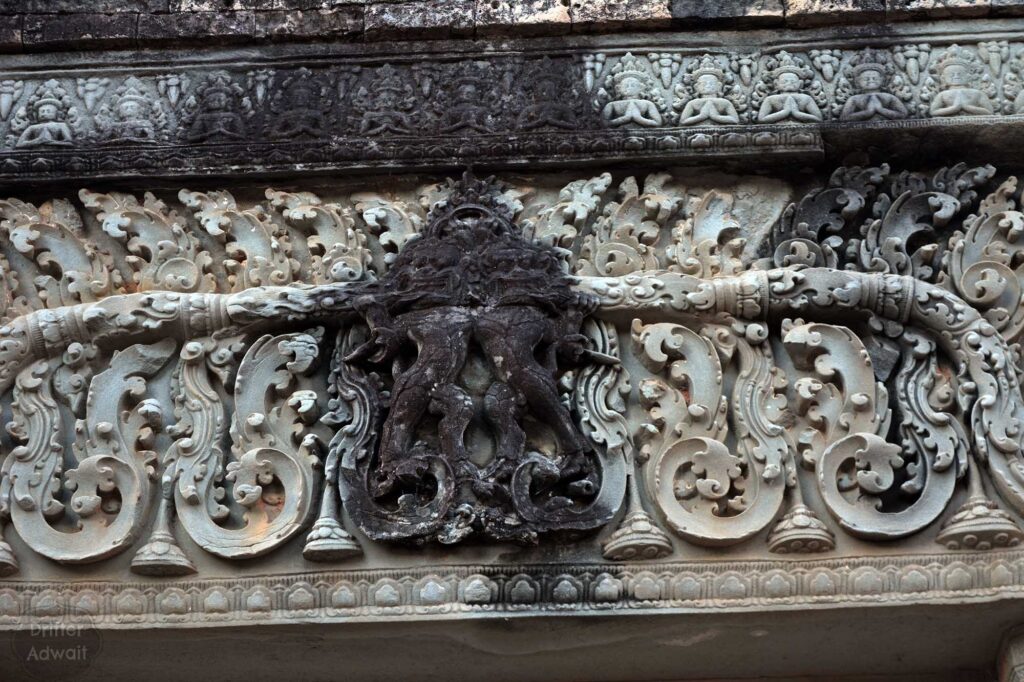
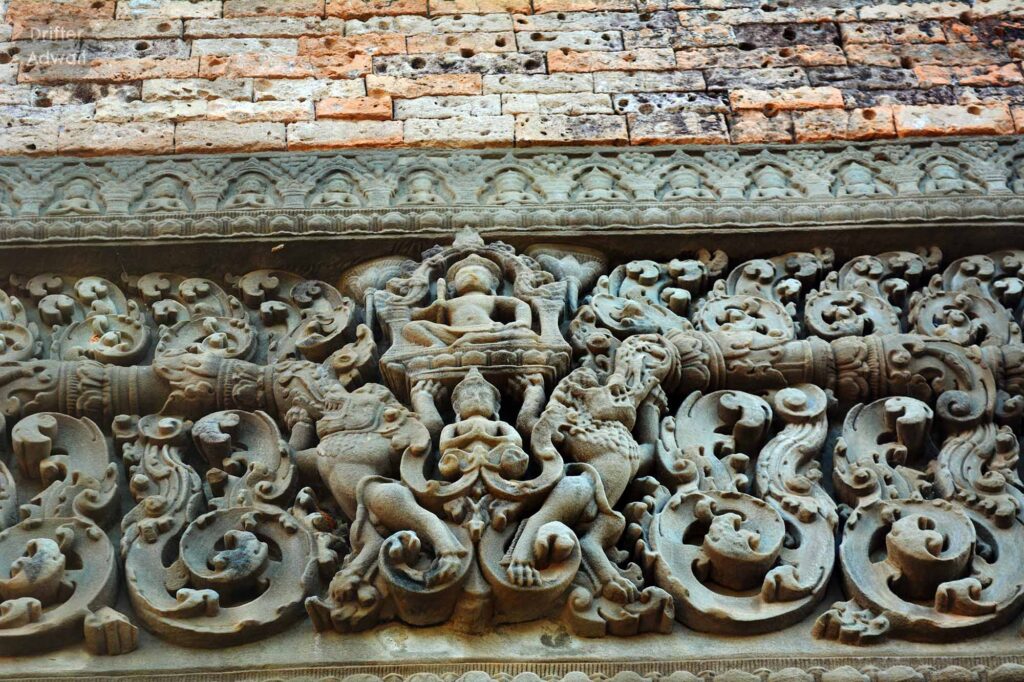
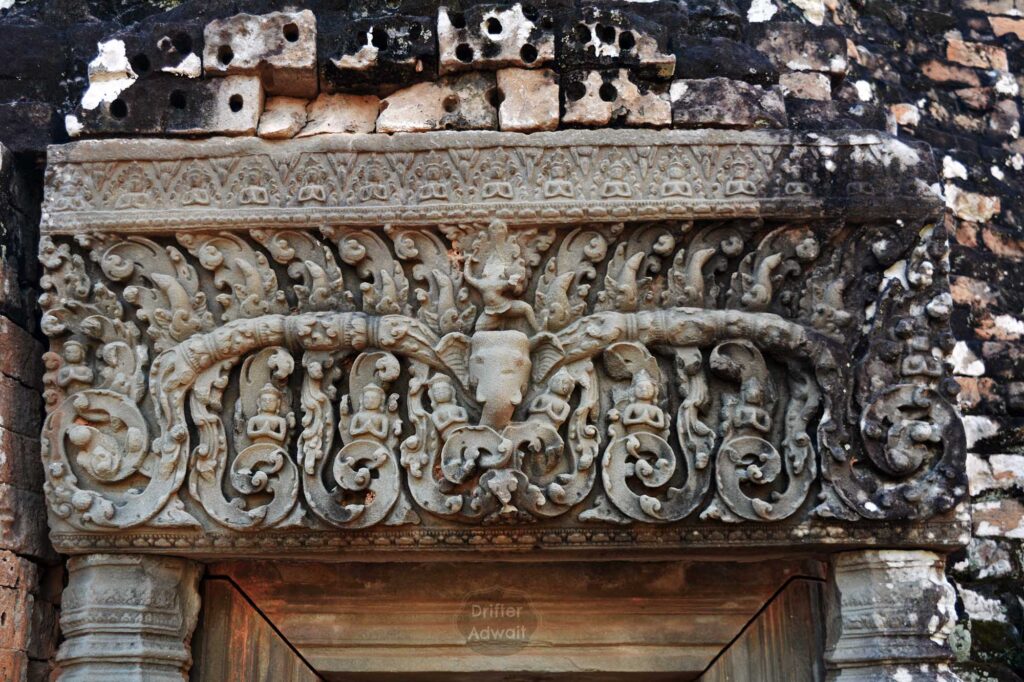
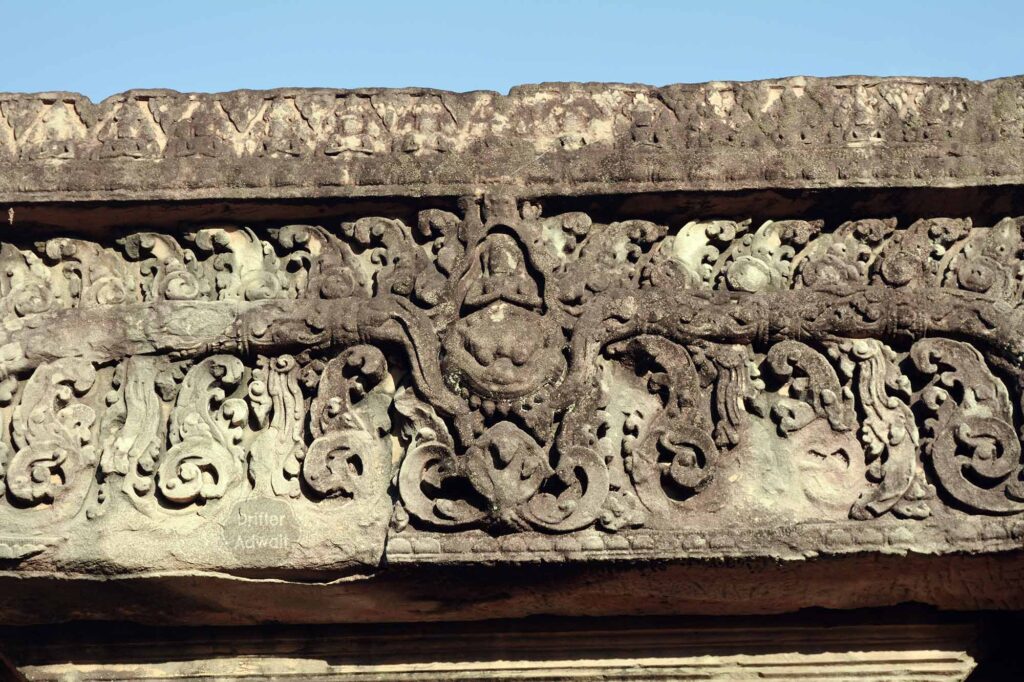
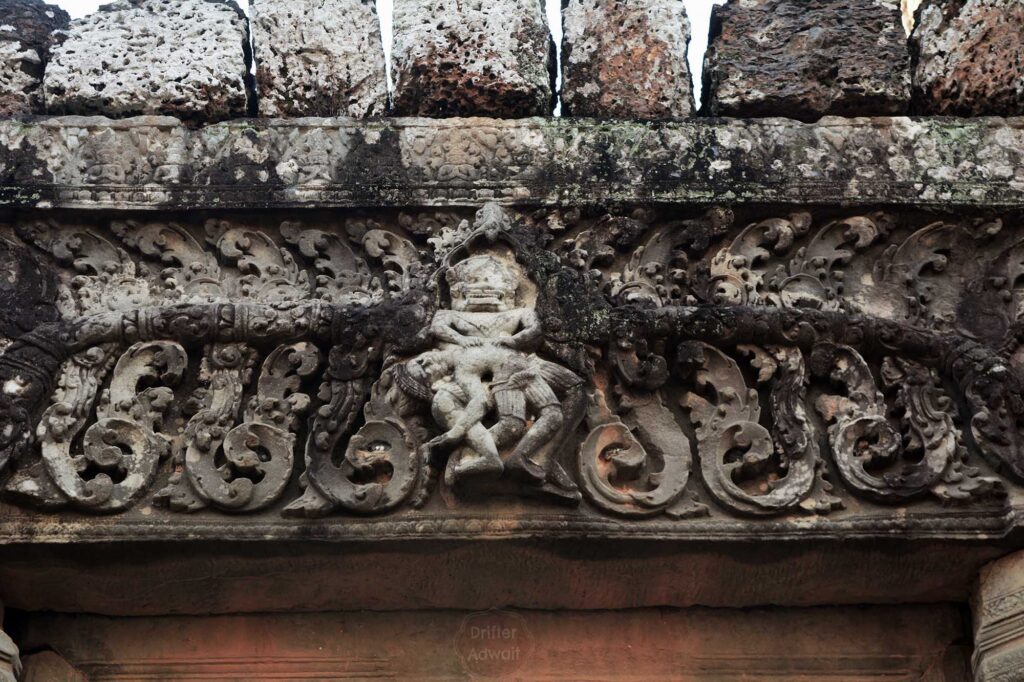
Within the carvings appear the gods. Indra rides his three headed elephant Airavata. Shiva rides the bull Nandi, calm and unshaken. The lintels are carved with restraint and grace, showing a hand trained not only in skill, but in judgment.
The Stone That Spoke Again
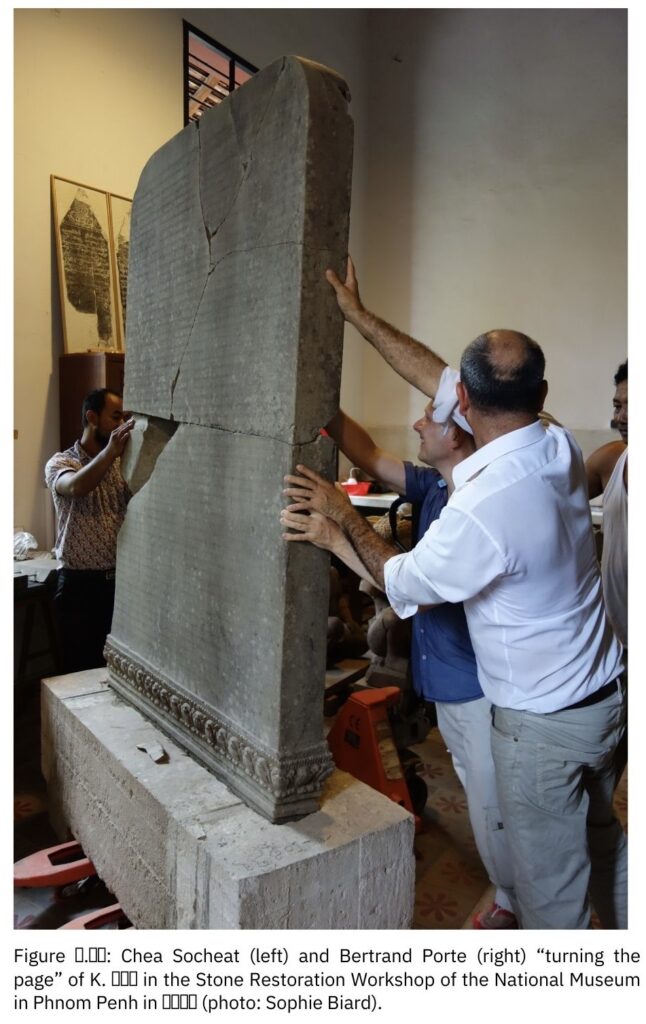
Time passed, and the waters of the East Baray slowly retreated. The temple stood alone on dry ground, and its story grew faint. Then, in the nineteenth century, scholars uncovered fragments of stone bearing an inscription.
The letters were Khmer, but the language was Sanskrit. This stele, known as K 528, revealed the voice of a poet long gone. It told who built the temple, when it was dedicated, and which gods dwelt within. Yet it also revealed something far greater.
A Poet of Many Ages
The author of the East Mebon inscription remains unnamed, but his learning shines clearly. He was not merely a craftsman of praise. He was a master of India’s greatest traditions. He knew the poets, the grammarians, the philosophers, and the teachers of rhetoric.
Through him, it becomes clear that Khmer poetry did not stand apart from India. It walked beside it, learning, adapting, and shaping its own voice without losing respect for its sources.
Kalidasa and the Measure of Kings
At the heart of the inscription lies the influence of Kalidasa’s Raghuvamsha. The poet uses its ideals to shape the image of Rajendravarman. The lineage of Dilipa and Raghu becomes a mirror in which the Khmer king is reflected.
The king is described as a pure moon born from a pure line. His military campaigns are shaped after the digvijaya of Raghu. His restoration of Yashodharapura recalls the renewal of Ayodhya. This is kingship measured against ancient standards, not momentary success.
Banabhatta and the Voice of Grace
From Banabhatta’s Harshacharita comes the story of Sarasvati, cursed to dwell among mortals. In the inscription, Rajendravarman is so worthy that the goddess finds her curse transformed into fortune.
From Kadambari comes the image of Mount Meru, the axis of the world, while lesser kings seek its foot. These images are not borrowed lightly. They are chosen with care and understanding.
Bharavi and the Discipline of Battle
The language of war in the inscription draws from Bharavi’s Kiratarjuniya. Battles are described with order and restraint. Warriors strike where they must and defend where they should. In one stanza, the king is compared to Arjuna, receiving divine weapons from Shiva through merit and devotion.
War here is not chaos. It is duty carried out within limits.
Grammar, Philosophy, and Rule
Paninian grammar appears throughout the inscription, not as dry learning, but as living metaphor. Governance is likened to the correct use of grammatical forms. Sankhya philosophy, Vaisheshika logic, and Kautilya’s Arthashastra all find a place.
Even Buddhist thought appears, with awareness of the doctrine of momentariness as taught by Vasubandhu. This was a world where ideas were not locked away in separate schools. They spoke to one another.

A Fifteen Hundred Year Intellectual Journey
Panini lived in an age so distant that it now feels like the dawn of recorded thought, around the sixth century BCE. Kalidasa came many centuries later, in the fifth century CE, when empires rose and fell, yet poetry still sought perfection. Banabhatta followed in the sixth or seventh century, writing with confidence born of a long and settled tradition.
Alongside them stand the Ramayana, the Mahabharata, and the Puranas, vast works whose beginnings are lost in time. Together, they form a continuous span of literary and philosophical effort stretching across roughly fifteen hundred years.
These works did not survive through chance or convenience. They survived because people remembered them. They were spoken aloud, taught carefully, and guarded with reverence. From this long chain of memory, they traveled more than five thousand kilometers from India to Cambodia. There, they were carved into stone at East Mebon, fixed in place as if to defy time itself. That such a journey was possible, and that it succeeded, is not merely impressive. It is quietly astonishing.
East Mebon and the Illusion of Modern Virality
In the modern world, words can reach millions within moments, yet they often vanish just as quickly. Attention is gained easily and lost without regret. What spreads fastest is rarely what lasts longest. This is the illusion of virality, bright and brief, leaving little behind once it passes.
The creators of the ancient world worked differently. They did not seek speed, nor did they measure success by reach alone. They sought depth, clarity, and endurance. Their ideas moved slowly, carried by memory and devotion, yet they endured where faster things failed. They crossed centuries and continents and became part of another civilization’s sacred landscape. East Mebon stands as proof that what is made with patience often outlives what is made in haste.

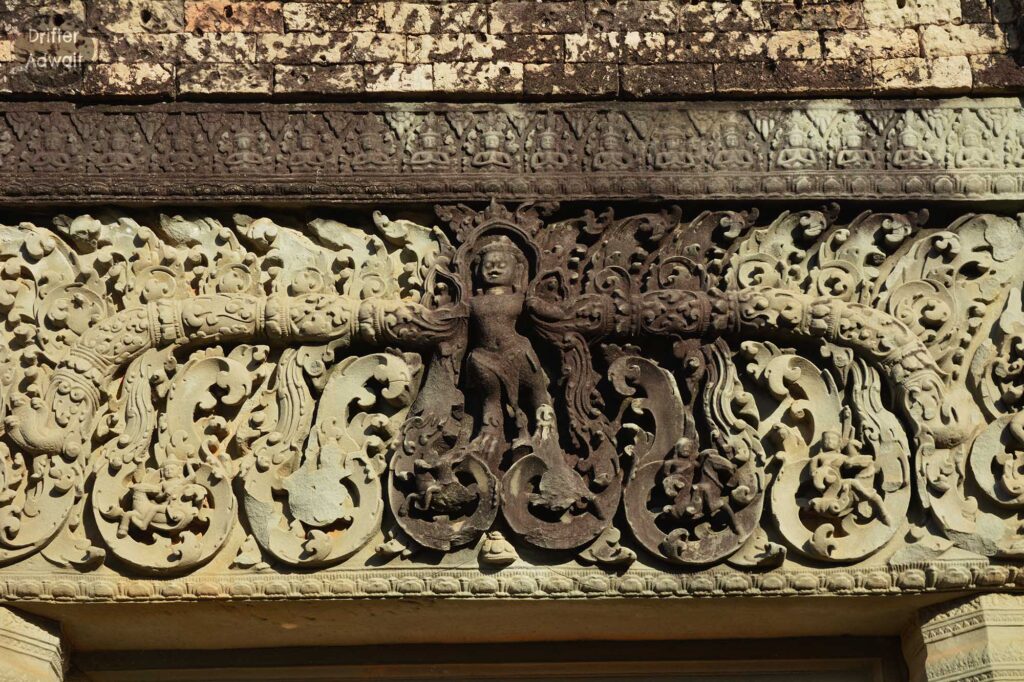
Pic Left: Lintel with Garuda Holding the Nagas, East Mebon
Pic Right: Lintel with Varuna Riding a Makara, East Mebon
Sitting at East Mebon Today
I sat on the steps of East Mebon as the sun moved slowly toward the horizon. The light softened, and the stone around me seemed to hold the warmth of many earlier evenings. The noise of the present world felt far away, as if it had no claim on this place. The temple did not feel abandoned. It felt settled, as though it had already seen everything it needed to see.
As I watched the sky darken, a simple thought came to me without effort or argument. Kalidasa and Banabhatta were the true giants of their age. They shaped minds rather than chasing attention. They wrote for readers they would never meet, trusting that someone, somewhere, would remember.
They did not rely on tools, machines, or fleeting fame. They relied on excellence, discipline, and faith in the future listener. What they created moved from memory to memory and from generation to generation, crossing oceans and centuries. It outlasted kingdoms and empires. Their works did not merely survive. They endured. In every sense that matters, they were the original all time bestsellers.



Reference:
Dominic Goodall. The East Mebon Stele Inscription from Angkor. Institut Français de Pondichéry / École française d’Extrême-Orient. pp.331, 2022, 978 2 85539 260 8. hal-03938904
Fantastic.. Loved the way of explaining East Mebon and letting us know the intricate details of it.
“A fifteen hundred year of intellectual journey” is The Best part of this article!!