Simhika was a shadow-seizing demoness in the Ramayana who attacked Hanuman during his journey to Lanka. This episode highlights Hanuman’s intelligence and strategic thinking.
The episode of Hanuman’s encounter with Simhika is one of the lesser-discussed yet symbolically powerful moments in the Ramayana. After meeting Mainaka and the serpent-goddess Surasa during his journey to Lanka, Hanuman continued his flight across the ocean with immense speed and strength. As he advanced toward Lanka, his gigantic form cast a shadow over the waters below, which attracted the attention of a demoness named Simhika, known in the Ramayana for her unique ability to capture prey by seizing their shadow. This episode is crucial part of the stories like “Hanuman Simhika story” and “Hanuman ocean crossing Ramayana.”
Simhika’s Shadow Power: A Unique Demon
Great Sage Valmiki writes this in Ramayana:
प्लवमानं तु तं दृष्ट्वा सिंहिका नाम राक्षसी। मनसा चिन्तयामास प्रवृद्धा कामरूपिणी।।
अद्य दीर्घस्य कालस्य भविष्याम्यहमाशिता। इदं हि मे महत्सत्त्वं चिरस्य वशमागतम्।।
Seeing Hanuman speeding in the sky a demoness called Simhika who can assume any form at her will had grown out of proportion and thought on her part:“After so long, at last a great being has come within my grasp. Today, after all this time, I shall finally have my fill.”
इति सञ्चिन्त्य मनसा छायामस्य समाक्षिपत्। छायायां गृह्यमाणायां चिन्तयामास वानरः।।
समाक्षिप्तोऽस्मि सहसा पङ्गूकृतपराक्रमः।प्रतिलोमेन वातेन महानौरिव सागरे।।
Simhika used her illusory powers to grasp Hanuman’s shadow on the ocean’s surface, momentarily slowing him down. Hanuman, though briefly puzzled, quickly realized that this was the very demoness Sugriva had warned him about.
As Simhika emerged from the depths of the ocean with an enormous and terrifying form, she prepared to devour him by opening her mouth wide like a cavern. In Hindu scriptures, Simhika is often described as a rare class of demon who attacks through shadows rather than direct force.
How Hanuman Defeated Simhika: Strategy Over Strength
स तां बुद्ध्वार्थतत्त्वेन सिंहिकां मतिमान्कपिः।। व्यवर्धत महाकायः प्रावृषीव वलाहकः।
तस्य सा कायमुद्वीक्ष्य वर्धमानं महाकपेः।। वक्त्रं प्रसारयामास पातालान्तरसन्निभम्।
Recognising the true nature of Simhika the clutcher of shadows, the wise Hanuman grew to a huge size like a cloud in rainy season.Observing the body of Hanuman growing in size, Simhika started distending her mouth wide like the depth of the underworld.
स तस्या विवृते वक्त्रे वज्रसंहननः कपिः।संक्षिप्य मुहुरात्मानं निष्पपात महाबलः।।
आस्ये तस्या निमज्जन्तं ददृशुः सिद्धचारणाः।ग्रस्यमानं यथा चन्द्रं पूर्णं पर्वणि राहुणा।।
Recognizing that brute force alone would not be effective, he adopted a strategic approach. He reduced his size drastically, making himself compact and agile, and entered her mouth deliberately. The siddhas and charanas who were watching his performance of drowning in her mouth were amazed as though the moon is seized by Rahu on a fullmoon night.
ततस्तस्या नखैस्तीक्ष्णैर्मर्माण्युत्कृत्य वानरः।उत्पपाताथ वेगेन मनः सम्पातविक्रमः।।
तां तु दृष्ट्वा च धृत्या च दाक्षिण्येन निपात्य च।स कपिप्रवरो वेगाद्ववृधे पुनरात्मवान्।।
Once inside, Hanuman used his sharp claws to tear apart her internal organs with great speed and precision. Before she could react or close her jaws, he exited her body, leaving her mortally wounded. Selfcontrolled Hanuman, the great monkey acting with firmness of mind and ingenuity threw her down and once again rapidly grew in size.
हृतहृत्सा हनुमतापपात विधुराम्भसि।तां हतां वानरेणाशु पतितां वीक्ष्य सिंहिकाम्।।
भूतान्याकाशचारीणि तमूचुः प्लवगोत्तमम्।भीममद्य कृतं कर्म महत्सत्त्वं त्वया हतम्।।
साधयार्थमभिप्रेतमरिष्टं प्लवतां वर।यस्य त्वेतानि चत्वारि वानरेन्द्र यथा तव।।
धृतिर्दृष्टिर्मतिर्दाक्ष्यं सः कर्मसु न सीदति।स तैः सम्भावितः पूज्यः प्रतिपन्नप्रयोजनः।।
जगामाकाशमाविश्य पन्नगाशनवत्कपिः।
Heart torn asunder and killed by Hanuman, miserable Simhika instantly fell into the sea water. Observing it, the beings who ranged the sky said to the foremost of vanaras: “O great jumper a great deed has been done by you today in killing that fierce creature.”
“O great monkey fulfil your mission without any obstruction.”O lord of vanaras he in whom these four qualities, fortitude, vision, intelligence and dexterity exist as in you will achieve his mission and not get lost”. Honoured by them the venerable monkey went ascending into the sky like Garuda to achieve the objective.
This episode is frequently interpreted as an example of Hanuman’s intellect combined with strength, making it a key lesson in strategy in the Ramayana and the balance of intellect and power.
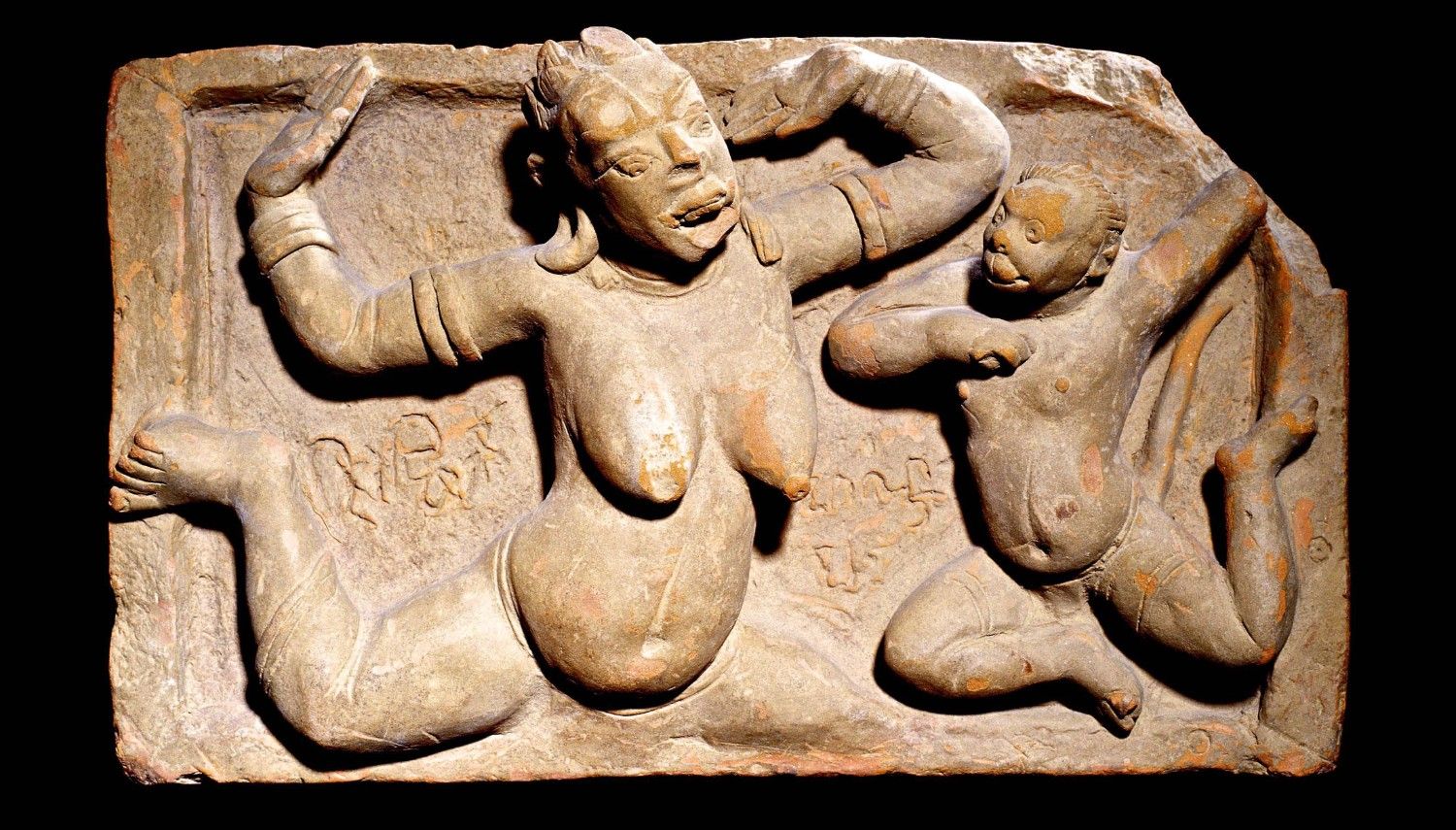
Gupta Period Terracotta Sculpture of Hanuman and Simhika
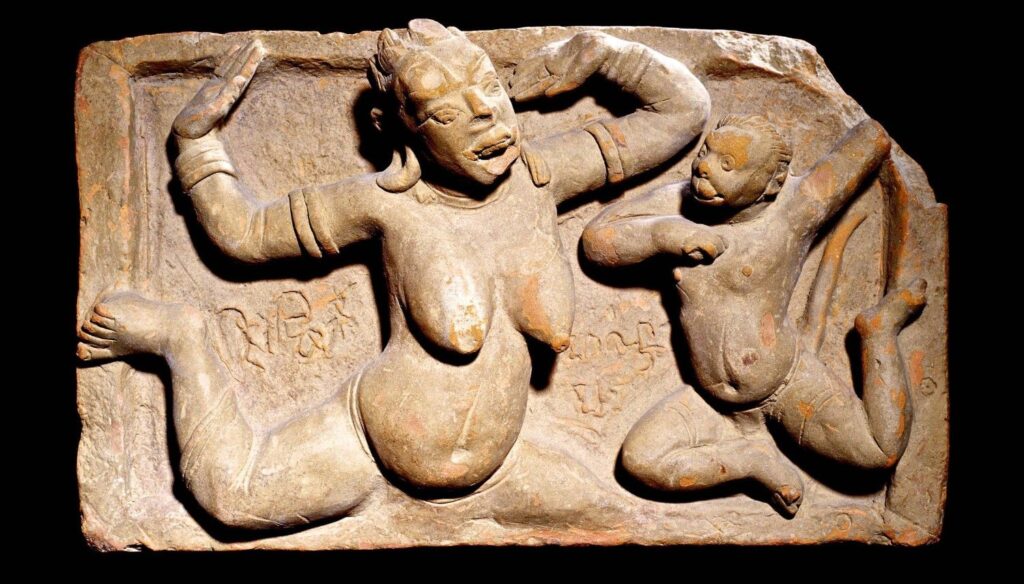
Gupta period, 5th century, Katingara, Uttar Pradesh.
This photograph was given to Donald Stadtner by the Bumper Collection, Calgary.
This specific Ramayana episode was not only preserved in textual tradition but was also depicted in early Indian art. A remarkable terracotta relief panel from the Gupta period, dated to approximately the early 5th century CE, portrays the confrontation between Hanuman and Simhika in vivid detail. This is considered an important example of Gupta period art and Ramayana terracotta sculpture in India.
In this sculpture, Simhika was depicted as larger and more imposing than Hanuman, highlighting her भयाण (fearsome) nature. Her physical features—such as a heavy torso, pronounced abdomen, lowered breasts, and ornamental elements like armlets, bangles, and earrings—reflected the iconography typically associated with rakshasis in ancient Indian art. There were also indications that she may have been represented with horn-like features, further emphasizing her demonic identity.
Iconography and Gupta Script Inscriptions in the Sculpture
Opposite her, Hanuman was shown in a confident and composed stance. Despite being smaller in scale within the panel, his posture conveyed immense power and control. His raised hand, balanced stance, and prominently curved tail symbolized readiness and latent strength. One of the most significant aspects of this sculpture was the presence of inscriptions in Gupta script beneath the figures, identifying them explicitly as “Simhika” and “Hanu–ma.”
These inscriptions are particularly valuable for Indian archaeology and Ramayana iconography studies, as they confirm the narrative being depicted without ambiguity.
Katingara Discovery: Lost Ramayana Sculptures from Uttar Pradesh Depicting Hanuman and Simhika
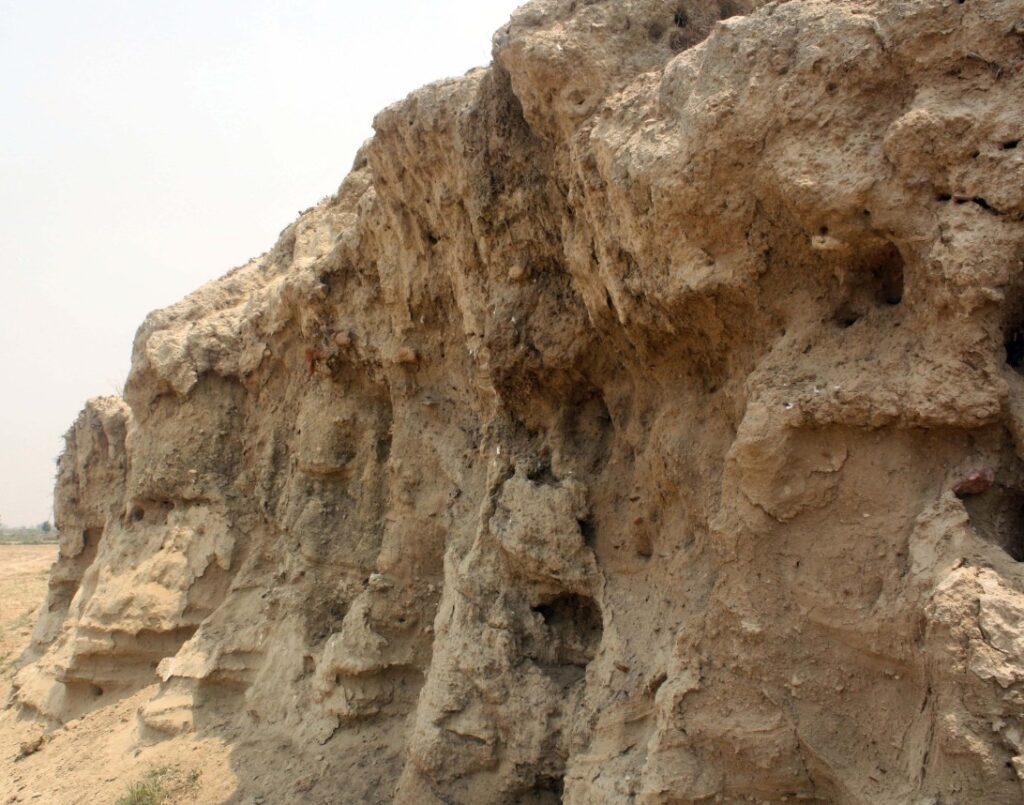
However, the history of this artifact is also marked by loss. The terracotta panels, including this depiction, were originally discovered near Katingara village in present-day Uttar Pradesh, where they had remained buried for centuries. During the 1960s and 1970s, excavations in the area revealed a significant collection of Ramayana-themed sculptures from the Gupta period.
This discovery is sometimes referenced in discussions around lost Indian sculptures and ancient Ramayana art discoveries. Unfortunately, instead of being systematically preserved and studied within India, many of these artifacts fell into the hands of smugglers and intermediaries.
Smuggling of Indian Antiquities and Global Museum Collections
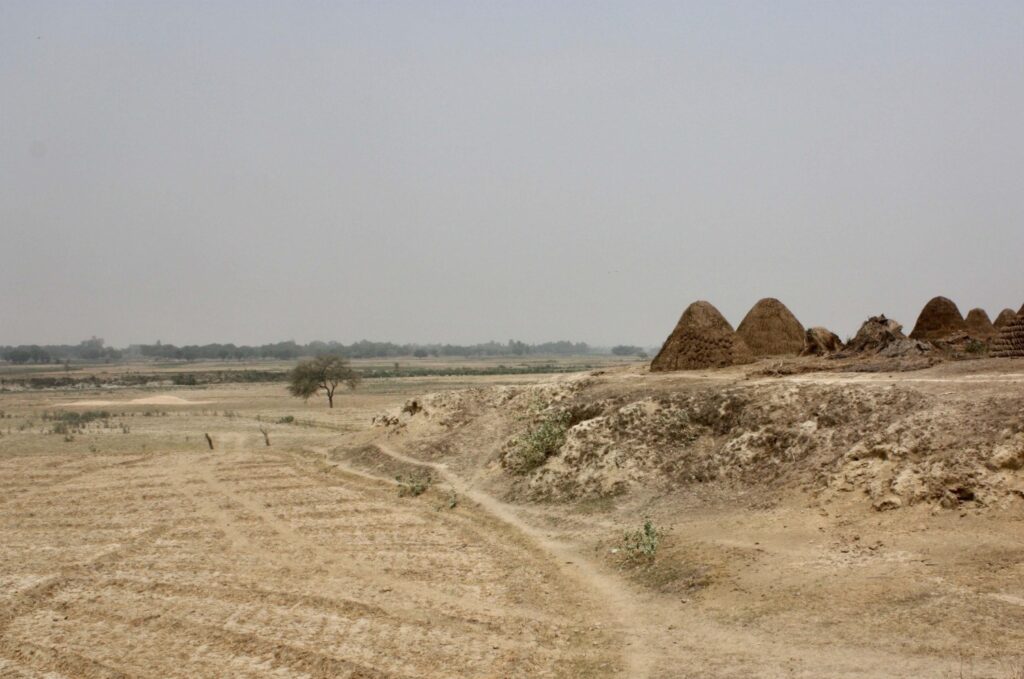
Due to a combination of local unawareness, economic incentives, and lack of protective mechanisms at the time, several of these sculptures were illicitly excavated and sold. By the 1980s, many of these Gupta period terracotta panels had surfaced in museums and private collections across the United States and Europe.
Today, they are often displayed as “Indian antiquities,” studied in academic contexts, and preserved under controlled conditions—but physically removed from the cultural and geographical landscape that originally produced them. This case is frequently cited in conversations about artifact smuggling in India, cultural heritage theft, and the global movement of antiquities.
Cultural Heritage Loss and the Importance of Preservation in India
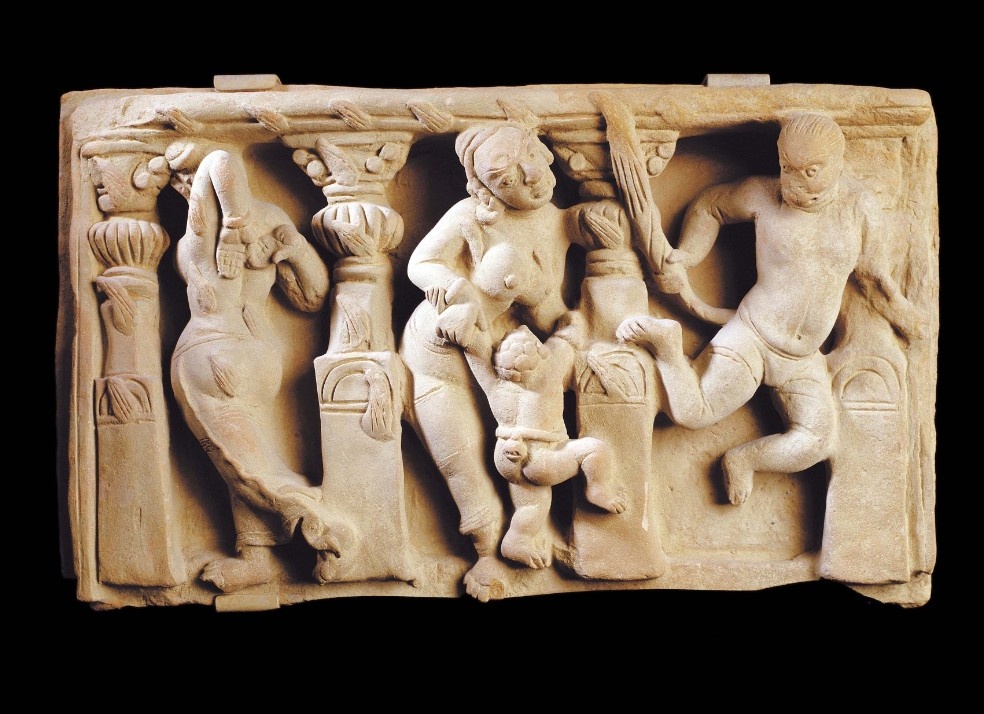
Private collection.
This photograph was given to Donald Stadtner by the Bumper Collection, Calgary.
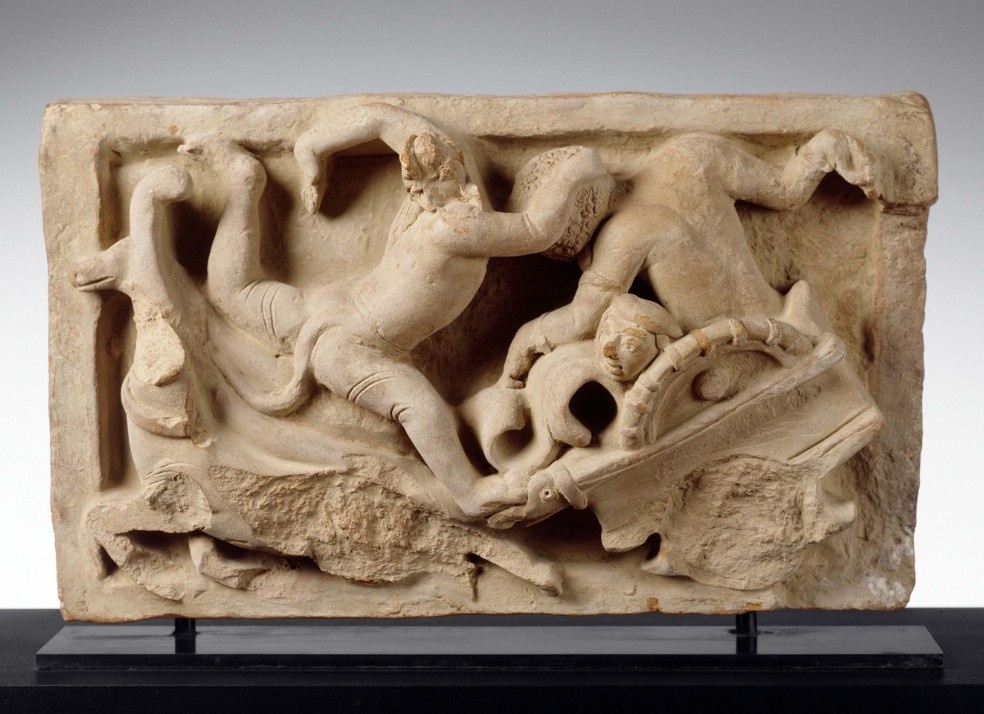
PhotographCourtesy of the Virginia Museum of Fine Arts.
This raises broader concerns regarding the preservation of Indian cultural heritage and the historical patterns of artifact displacement. While figures like Hanuman continue to be widely revered in religious and cultural contexts, the material expressions of these traditions such as sculptures, inscriptions, and temple art have not always received the same level of protection.
The story of the Simhika-Hanuman terracotta relief thus serves not only as a narrative from the Ramayana but also as a case study in heritage conservation in India, archaeological preservation, and the consequences of neglect.
Hanuman Jayanti Reflection: Remembering and Preserving Our Heritage
On the occasion of Hanuman Jayanti, reflecting on such episodes offers an opportunity to move beyond devotional remembrance and toward a more conscious engagement with cultural preservation. Understanding the historical, artistic, and archaeological value of these artifacts is an essential step in ensuring that similar losses do not continue in the future.
References:
1. Locating the Lost Gupta Period Rāmāyaṇa Reliefs from Katingara, Uttar Pradesh, India.
By Laxshmi Greaves, Department of Religious Studies and Theology, School of history, archaeology and Religion, Cardiff University.
2. ShrimadValmikiya Ramayan, First Volume, With Hindi Translation, Gita Press Gorakhpur.