Planning a Hoysala Temple Tour?
Start Here…
| DURATION | ITINERARY | FOCUS |
|---|---|---|
| 1 Day Tour | Belur + Halebidu | Essential Hoysala architecture |
| 2 Days Tour | Belur + Halebidu + Somanathapura + Panchalingeshwara | Complete UNESCO Hoysala circuit |
| 3 Days Tour | Belur + Halebidu + Somanathapura + Shravanabelagola | UNESCO ensemble + Jain heritage |
| 4 Days Tour | UNESCO circuit + Shravanabelagola + Belavadi/Javagal | Serious architectural study |
| 5 Days Tour | UNESCO circuit + Shravanabelagola + Belavadi + Javagal + Nuggehalli + Doddagaddavalli / Koravangala / Arasikere | Deep Hoysala temple circuit |
Over the years, I have written extensively for magazines, blogs, and social media about Hoysala temples, Hoysala art and architecture, and medieval Karnataka history. Yet, one question consistently tops the list from fellow heritage enthusiasts:
“What is the best Hoysala temple tour itinerary?”
The answer extends far beyond the famous duo of Belur and Halebidu.
The Hoysala temple circuit in Karnataka spans across multiple districts, featuring breathtaking, lesser-known masterpieces at Somanathapura, Belavadi, Javagal, Nuggehalli, Doddagaddavalli, Koravangala, and Arasikere. For anyone passionate about Indian temple architecture, iconography, sculpture, and epigraphy, every single site offers a distinct visual narrative.
As a student of Indology and a subject-matter expert in Indian art and heritage, I have spent years researching and exploring these magnificent monuments. I have also had the privilege of working as a Tour Subject-Matter Expert with Ancient Trails, one of India’s leading heritage travel organizations.
Naturally, travelers frequently reach out asking for practical travel advice:
How many days are needed for a complete Hoysala tour?
Can you cover Belur, Halebidu, and Somanathapura together in a single trip?
How do you route Shravanabelagola alongside the Hoysala circuit?
Which offbeat Hoysala temples are actually worth visiting?
That is precisely why I built this comprehensive travel guide.
Below, you will find practical 1-day, 2-day, 3-day, 4-day, and 5-day Hoysala temple itineraries. These routes cover the newly inscribed UNESCO World Heritage Sites (The Sacred Ensembles of the Hoysalas) alongside off-the-beaten-path monuments, complete with notes on architectural features, star carvings, and historical context.
Guided Heritage Tours & Private Expeditions
If you are looking for a professionally organized Hoysala temple package tour, I highly recommend connecting with Ancient Trails. They specialize in curated heritage travel and know exactly how to navigate rural Karnataka efficiently—ensuring you move seamlessly between sites without getting lost looking for hidden temples!
If you prefer small-group travel, flexible road trips, and spending an unreasonable amount of time analyzing the intricate detail on a single soapstone pillar, you can also reach out to me directly for a private Hoysala architecture tour. I lead bespoke heritage walks and private trips for individuals and small groups who want to explore Hoysala sculpture and history at a deeper, more leisurely pace.
After all, my backpack is usually packed anyway. Give me a Hoysala temple, a comfortable pair of walking shoes, and a few hours to study stone relief sculptures—and I am ready to hit the road.
The Ultimate Hoysala Travel Circuit: UNESCO Highlights & Offbeat Temples
If you are planning a Hoysala temple tour in Karnataka, one essential circuit forms the foundation of every great itinerary:
Belur → Halebidu → Somanathapura
These three monuments are far more than just famous tourist places in Karnataka. Together, they form the Sacred Ensembles of the Hoysalas—inscribed as a UNESCO World Heritage Site in 2023. UNESCO recognizes these sites as the finest, most representative examples of 12th- and 13th-century Hoysala temple architecture.
Visiting all three provides a complete masterclass in medieval Indian art. Far from repetitive, each site showcases distinct ground plans, star-shaped platforms (jagati), surviving superstructures (shikharas), and intricate soapstone sculpture programs:
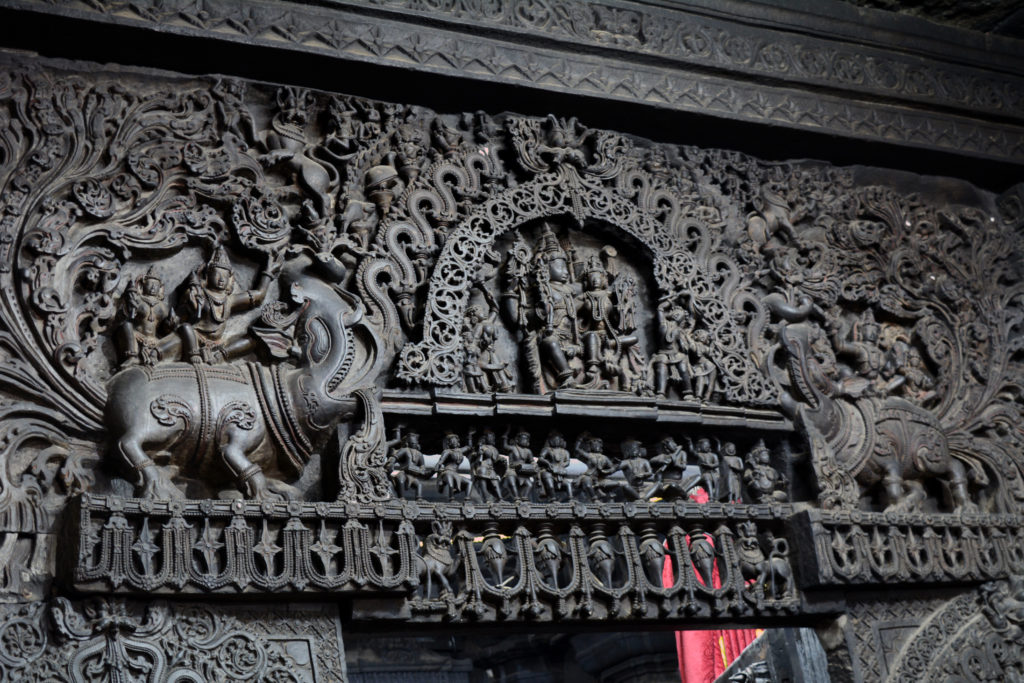
Chennakesava Temple, Belur: Famous for its breathtaking Madanika bracket figures and elaborate lathe-turned pillars.
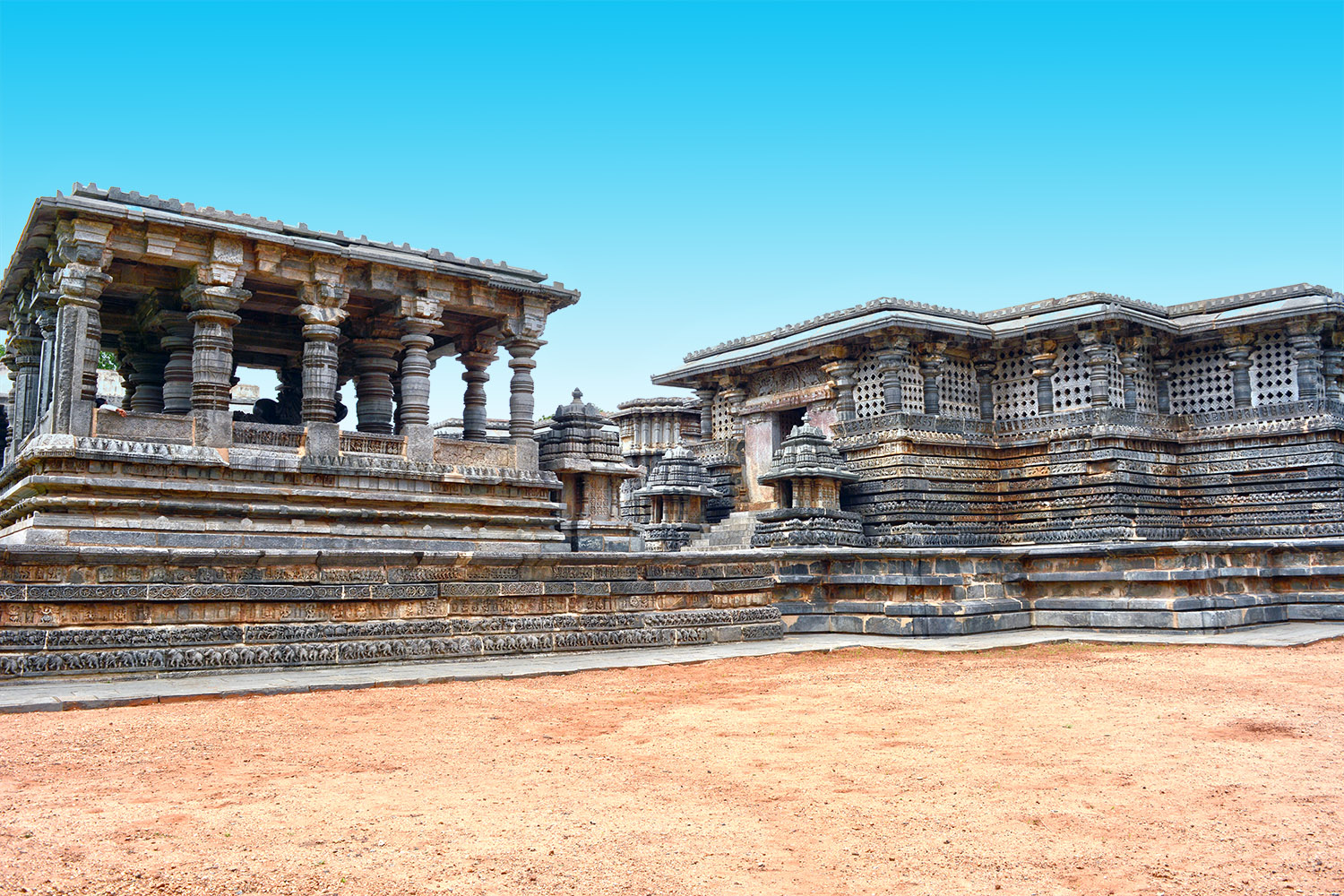
Hoysaleswara Temple, Halebidu: Renowned for its double-shrine (Dvikuta) layout and endless bands of wall friezes detailing epic legends.
Keshava Temple, Somanathapura: Celebrated as a pristine, fully intact triple-shrine (Trikuta) star-shaped temple.
Expanding the Hoysala Heritage Circuit
While the UNESCO triad is the main draw, it is only the starting point for a complete Karnataka heritage tour. Once you have explored Belur, Halebidu, and Somanathapura, you can expand your route to include magnificent, lesser-known Hoysala architecture sites such as: Belavadi (Veera Narayana Temple), Javagal (Laksmi Narasimha Temple), Nuggehalli (Laksmi Narsimha & Sadashiva Temples), Doddagaddavalli (Lakshmi Temple), Koravangala (Bucesvara Temple), Arasikere (Ishvara Temple), Amruthapura (Amrutheshwara Temple), Hosaholalu (Lakshminarayana Temple) and many more…
For travelers interested in Jain heritage in Karnataka, early medieval epigraphy, and ancient inscriptions, adding a dedicated full day for Shravanabelagola (home to the colossal Gommateshwara statue) seamlessly connects the cultural and religious history of the region.
HOYSALA TEMPLES — 1 TO 5 DAY ITINERARIES
HOYSALA TEMPLES 1 DAY ITINERARY
With only one day, focus on Belur + Halebidu. Do not try to add Somanathapura.
Day 1 — Belur + Halebidu
Morning: Chennakeshava Temple, Belur
Lunch: Belur / Halebidu
Afternoon: Hoysaleshwara Temple + Kedareshwara Temple, Halebidu
Evening: Stay at Hassan or Belur
HOYSALA TEMPLES 2 DAY ITINERARY
Two days allow you to cover the complete UNESCO Hoysala ensemble.
Day 1 — Belur + Halebidu:
Morning: Chennakeshava Temple, Belur
Lunch: Belur / Halebidu
Afternoon: Hoysaleshwara + Kedareshwara, Halebidu
Evening: Stay at Hassan
Day 2 — Somanathapura + Panchalingeshwara:
Morning: Keshava Temple, Somanathapura
Lunch: Somanathapura / Mysuru side
Afternoon: Panchalingeshwara Temple, Govindanahalli (if time permits)
Evening: Stay at Mysuru / continue onward
HOYSALA TEMPLES 3 DAY ITINERARY
Day 1 — Belur + Halebidu
Morning: Chennakeshava Temple, Belur
Lunch: Belur / Halebidu
Afternoon: Hoysaleshwara + Kedareshwara, Halebidu
Stay: Hassan
Day 2 — Shravanabelagola:
Morning: Vindhyagiri Hill + Gommateshwara
Lunch: Shravanabelagola
Afternoon: Chandragiri Hill + Jain basadis
Stay: Shravanabelagola / Hassan
Day 3 — Somanathapura
Morning: Keshava Temple, Somanathapura
Lunch: Somanathapura
Afternoon: Panchalingeshwara, Govindanahalli (optional)
Evening: Mysuru / onward
HOYSALA TEMPLES 4 DAY ITINERARY
Day 1 — Belur + Halebidu
Morning: Chennakeshava Temple
Lunch: Belur
Afternoon: Hoysaleshwara + Kedareshwara
Stay: Hassan
Day 2 — Shravanabelagola
Morning: Vindhyagiri + Gommateshwara
Lunch: Shravanabelagola
Afternoon: Chandragiri
Stay: Hassan / Shravanabelagola
Day 3 — Somanathapura
Morning: Keshava Temple
Lunch: Somanathapura
Afternoon: Free / Panchalingeshwara
Stay: Hassan
Day 4 — Belavadi + Javagal
Morning: Veeranarayana Temple, Belavadi
Lunch: Belavadi / Javagal
Afternoon: Lakshminarasimha Temple, Javagal
Evening: Stay at Hassan
HOYSALA TEMPLES 5 DAY ITINERARY
Day 1 — Belur + Halebidu
Morning: Chennakeshava Temple, Belur
Lunch: Belur
Afternoon: Hoysaleshwara + Kedareshwara, Halebidu
Stay: Hassan
Day 2 — Shravanabelagola
Morning: Vindhyagiri + Gommateshwara
Lunch: Shravanabelagola
Afternoon: Chandragiri
Stay: Hassan / Shravanabelagola
Day 3 — Somanathapura
Morning: Keshava Temple, Somanathapura
Lunch: Somanathapura
Afternoon: Panchalingeshwara, Govindanahalli
Stay: Hassan / Mysuru
Day 4 — Belavadi + Javagal
Morning: Veeranarayana Temple, Belavadi
Lunch: Belavadi / Javagal
Afternoon: Lakshminarasimha Temple, Javagal
Stay: Hassan
Day 5 — Nuggehalli + one additional temple
Morning: Lakshminarasimha Temple, Nuggehalli
Lunch: Nuggehalli / Hassan
Afternoon: Doddagaddavalli / Koravangala / Arasikere
Evening: Hassan / onward
FOCUS BY DURATION
1 Day: Essential Hoysala — Belur + Halebidu
2 Days: Complete UNESCO Hoysala ensemble
3 Days: UNESCO + Shravanabelagola
4 Days: UNESCO + Jain heritage + Belavadi/Javagal
5 Days: Deep Hoysala temple circuit
HOYSALA TEMPLES: WHAT NOT TO MISS
Chennakeshava Temple, Belur — What to See
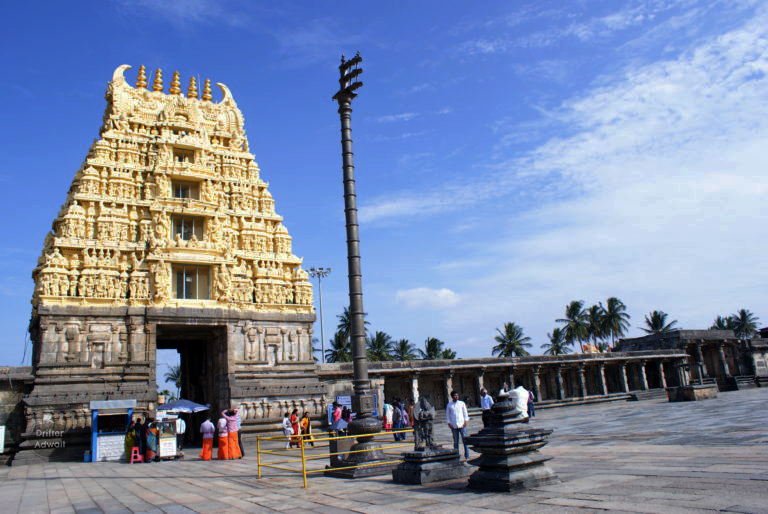
Built: 1117 CE, Hoysala King Vishnuvardhana
Deity: Chennakeshava, form of Vishnu
Material: Soapstone / Chloritic schist
Architecture: Hoysala architecture, star-shaped jagati, raised platform
See this: Star-shaped temple plan, circumambulatory platform, richly carved exterior, multiple projections and recesses
Don’t miss this:
Hoysala temple sculptures: Ramayana, Mahabharata, Krishna scenes, Vishnu avatars
Madanikas / Shilabalikas: Darpana Sundari, woman with parrot, dancers, musicians
Famous pillars: Lathe-turned pillars, polished pillars, ornate capitals
Ceiling carvings: Giant lotus, geometric panels, pendant motifs
Sanctum: Chennakeshava image, ornate doorway, Vaishnava imagery
Symbols & emblems: Garuda, conch, chakra, lotus, Vishnu motifs
Inscriptions: Kannada inscriptions, Hoysala inscriptions, royal patronage
Other shrines: Kappe Chennigaraya Temple, smaller Hoysala shrines, Garuda pillar
Look closely: Jewellery, fingernails, hair, textiles, facial expressions, miniature figures, animal details
UNESCO: Belur, Halebidu and Somnathpura — Hoysala Sacred Ensembles
Approximate time to See Chennakeshava Temple, Belur: 2–2.5 Hrs.
Hoysaleshwara Temple, Halebidu — What to See
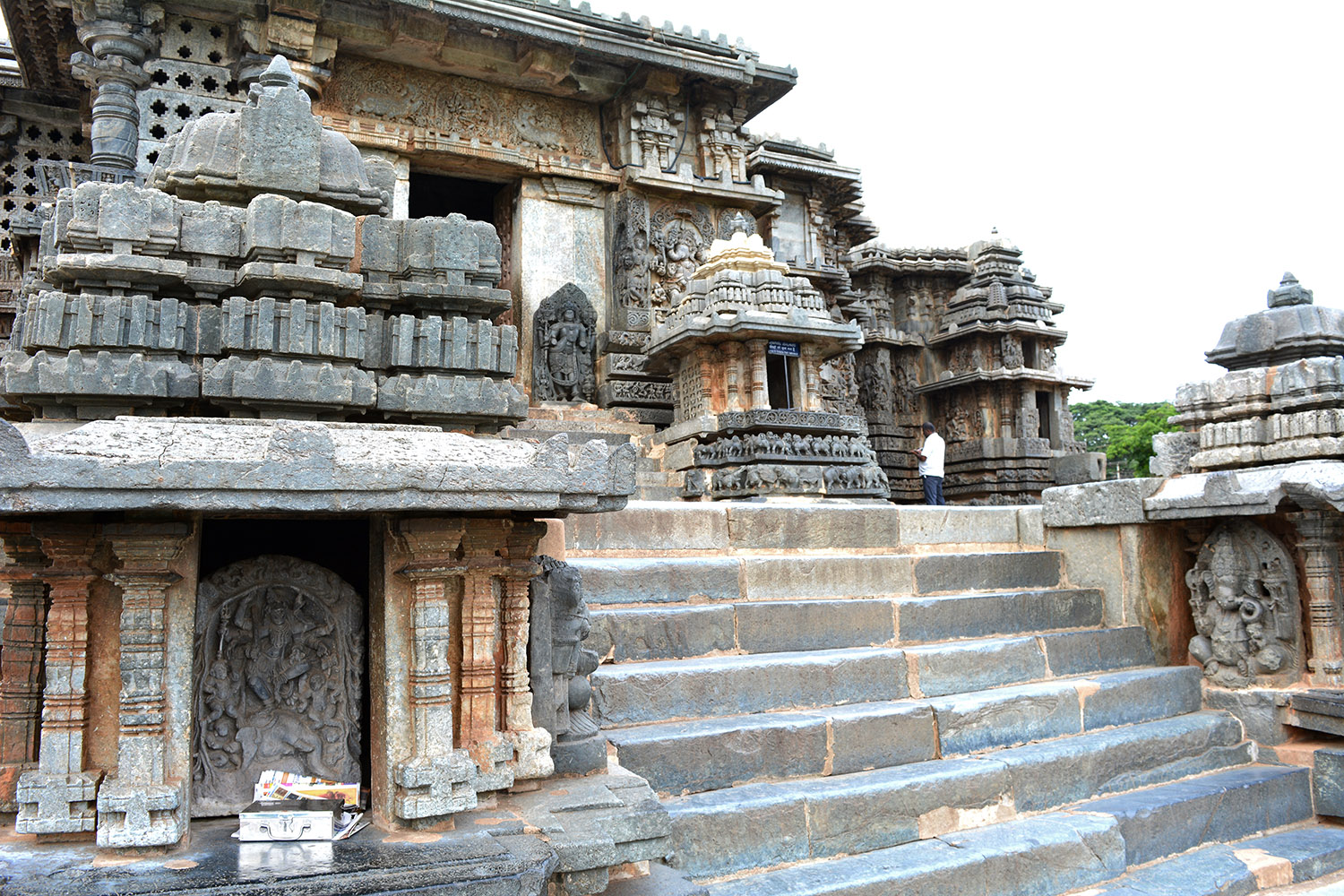
Built: 12th century, Hoysala King Vishnuvardhana’s reign
Deity: Hoysaleshwara, form of Shiva
Material: Soapstone / Chloritic schist
Architecture: Hoysala architecture, twin-shrine Dvikuta temple, star-shaped plan
See this: Star-shaped platform, twin sanctums, richly carved exterior, multiple projections and recesses
Don’t miss this:
Hoysala temple sculptures: Ramayana, Mahabharata, Puranic scenes, Shiva, Vishnu, Devi, Krishna
Shiva sculptures: Nataraja, Andhakasura Vadha, Ravana shaking Kailasa, Dakshinamurti
Famous panels: Gajasurasamhara, Narasimha, Varaha, Govardhana Krishna
Exterior friezes: Elephants, lions, horses, foliage, swans, epic and mythological narratives
Special pillars: Kuwara Lakshma Pillar, Lathe-turned pillars, polished surfaces, intricate geometric carving
Ceiling carvings: Lotus medallions, ornate geometric patterns, celestial figures
Doorways: Elaborately carved sanctum entrances, guardian figures, Shaiva and Vaishnava imagery
Inscriptions: Kannada inscriptions, Hoysala royal and temple records
Temple complex: Hoysaleshwara and Shantaleshwara shrines, Nandi mandapas, large Nandi sculptures, Sun Temple, Museum by ASI
Look closely: Jewellery, fingernails, hair, weapons, miniature figures, animal details, minute narrative carving
Special: See the two Nandi sculptures facing the twin Shiva shrines; see the remarkable exterior sculpture where virtually every available surface becomes part of the narrative programme.
Approximate time to See Hoysaleshwara Temple, Halebidu: 2–2.5 Hrs.
Kedareshwara Temple, Halebidu — What to See
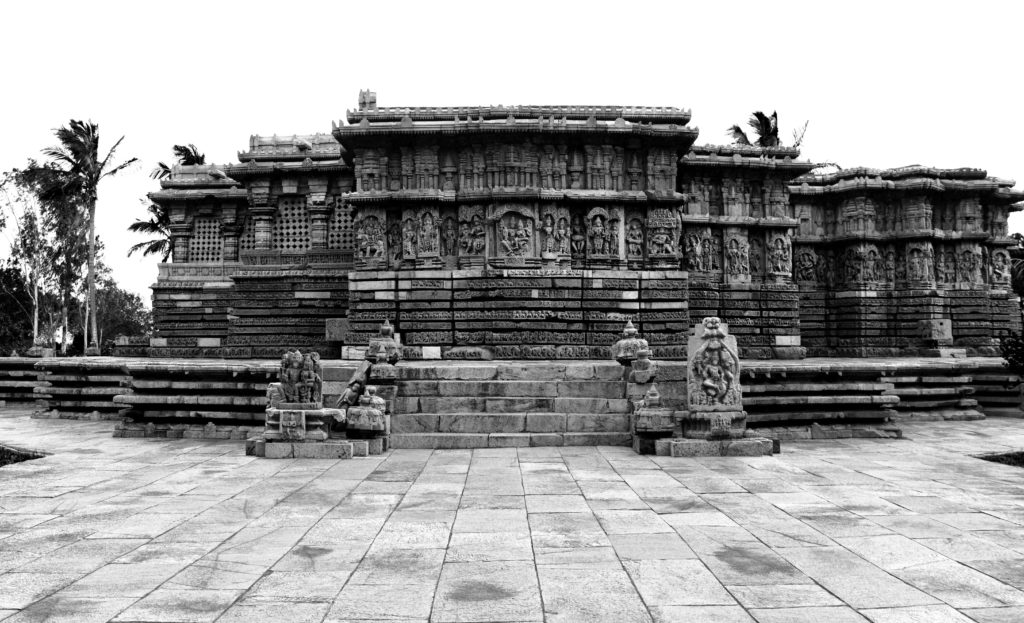
Built: Early 13th century, Hoysala period
Deity: Kedareshwara, form of Shiva
Material: Soapstone / Chloritic schist
Architecture: Hoysala architecture, Trikuta (three-shrined) temple, star-shaped plan
See this: Star-shaped platform, three sanctums, ornate exterior walls, richly carved mouldings
Don’t miss this:
Hoysala temple sculptures: Shiva, Vishnu, Devi, Ganesha, Surya, mythological scenes
Exterior friezes: Elephants, lions, horses, swans, foliage, epic and Puranic narratives
Special sculptures: Harihara, Narasimha, Varaha, Gajasurasamhara, Nataraja
Pillars: Polished lathe-turned pillars, geometric carving, ornate capitals
Ceilings: Intricate lotus medallions, geometric patterns, pendant motifs
Doorways: Elaborately carved entrances, Shaiva imagery, guardian figures
Temple setting: Quiet location, ruined outer structures, excellent views of Hoysala stone craftsmanship
Look closely: Jewellery, miniature figures, facial expressions, weapons, animal details, fine floral carving
Special: See the distinctive star-shaped architecture and exceptionally well-preserved sculptural details; compare the smaller Kedareshwara with the much larger Hoysaleshwara Temple nearby.
Approximate time to See Kedareshwara Temple, Halebidu: 45–60 Mins.
Chennakeshava Temple, Somnathpur — What to See
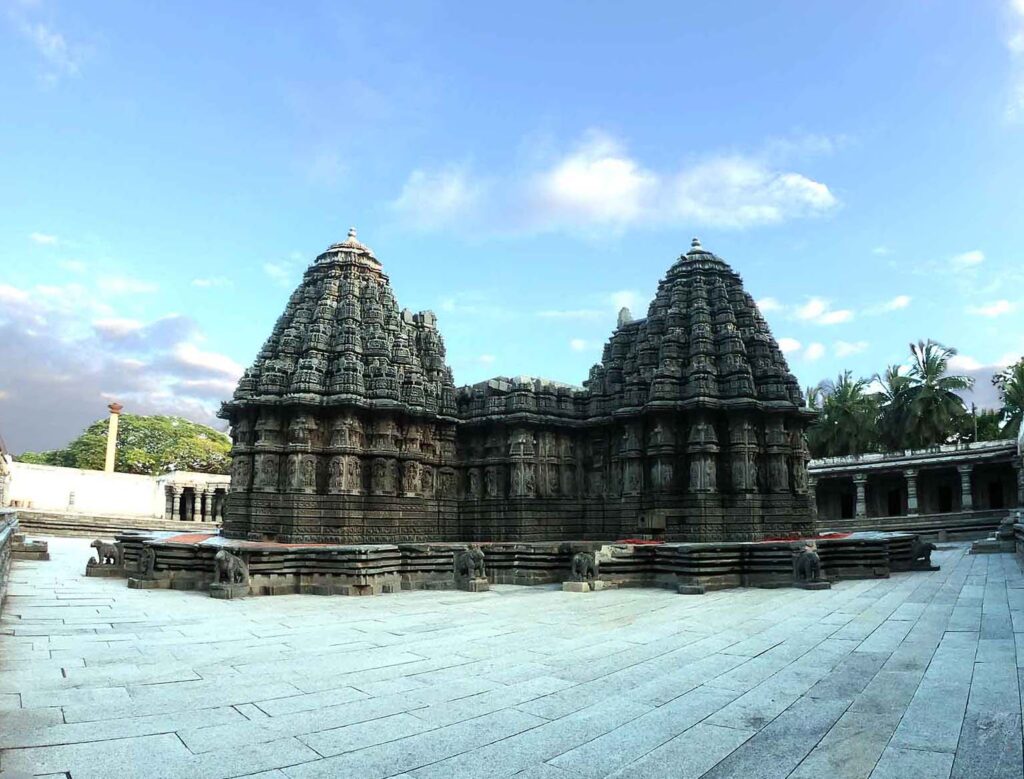
Built: 1268 CE, Hoysala King Narasimha III
Deity: Chennakeshava, form of Vishnu
Material: Soapstone / Chloritic schist
Architecture: Hoysala architecture, Trikuta (three-shrined) temple, star-shaped plan
See this: Star-shaped jagati, three sanctums, ornate outer walls, richly carved temple tower, circumambulatory platform.
Don’t miss this:
Hoysala temple sculptures: Vishnu avatars, Krishna, Shiva, Devi, Ganesha, Surya, mythological scenes
Exterior friezes: Elephants, horses, lions, swans, foliage, epic and Puranic narratives
Famous sculptures: Narasimha, Varaha, Trivikrama, Venugopala, Gajasurasamhara
Special feature: Exceptionally well-preserved Hoysala vimana towers and detailed exterior sculpture
Ceilings: Intricate lotus medallions, concentric patterns, sculpted figures
Doorways: Elaborately carved sanctum entrances, Vaishnava imagery, guardian figures
Temple complex: Three shrines, enclosed courtyard, jagati and surrounding subsidiary structures
Look closely: Tiny jewellery, hairstyles, weapons, miniature figures, animal details, textile patterns and narrative scenes
Special: See the three star-shaped shrines arranged around the central hall; Somnathpur is particularly famous for its remarkably intact Hoysala exterior sculpture and architectural detail.
UNESCO: Part of the Sacred Ensembles of the Hoysalas, UNESCO World Heritage Site
Approximate time to See Chennakeshava Temple, Somnathpur: 1.5–2 Hrs.
Panchalingeshwara Temple, Govindanahalli — What to See
Built: 1238 CE, Hoysala King Vira Someshwara
Deity: Five forms of Shiva — Panchalingeshwara
Material: Soapstone / Chloritic schist
Architecture: Hoysala architecture, Panchakuta (five-shrined) temple
See this: Five sanctums, common navaranga, star-shaped shrine plans, carved exterior walls
Don’t miss this:
Five Shiva shrines: Five lingas, five sanctums, individual shrine towers
Hoysala sculptures: Shiva, Vishnu, Devi, Ganesha, Surya, mythological figures
Exterior friezes: Elephants, lions, horses, swans, foliage, geometric mouldings
Special feature: Rare Panchakuta Hoysala temple — one of the best examples of the five-shrine plan
Pillars: Lathe-turned pillars, polished surfaces, ornate capitals
Doorways: Elaborately carved entrances, guardian figures, Shaiva imagery
Temple setting: Open, relatively quiet complex with an excellent opportunity to study Hoysala architecture without large crowds
Look closely: Doorframe carving, miniature figures, floral motifs, pillar details, sculpted deities and friezes
Special: See the five shrines arranged in the Panchakuta plan — the defining architectural feature of Govindanahalli’s Panchalingeshwara Temple.
Approximate time to See Panchalingeshwara Temple, Govindanahalli: 45–60 Mins.
Veera Narayana Temple, Belavadi — What to See
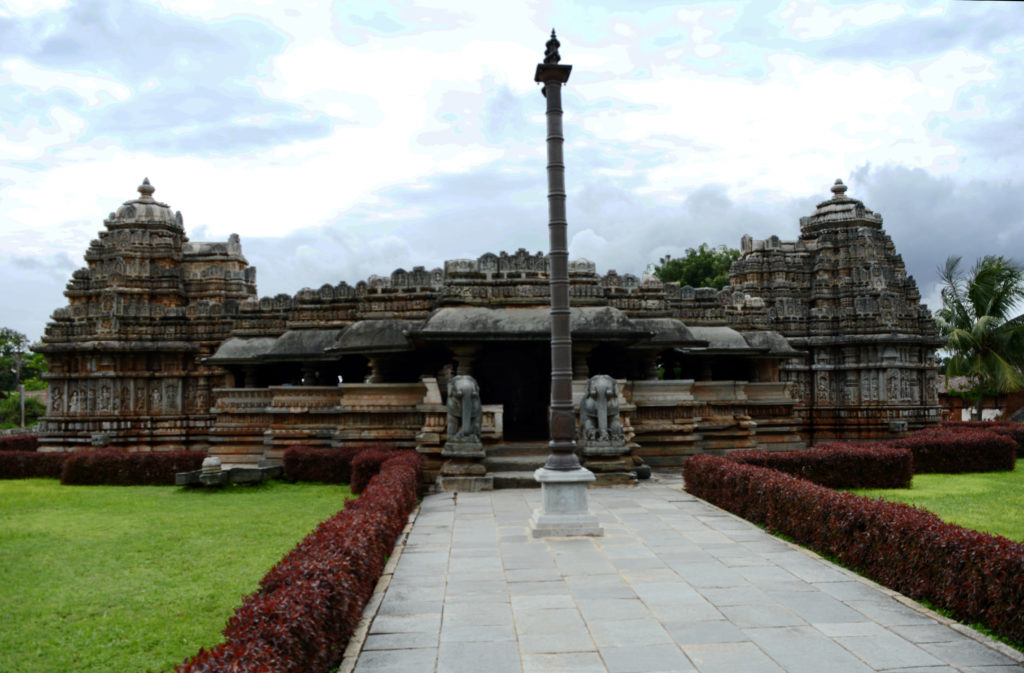
Built: 13th century, Hoysala period
Deity: Veera Narayana, form of Vishnu
Material: Soapstone / Chloritic schist
Architecture: Hoysala architecture, Trikuta (three-shrined) temple
See this: Three sanctums, spacious navaranga, ornate pillars, richly carved exterior, distinctive Hoysala plan
Don’t miss this:
Three shrines: Veera Narayana, Venugopala, Yoga Narasimha
Vishnu sculptures: Narasimha, Varaha, Trivikrama, Venugopala, Vishnu avatars
Special sculpture: Beautiful Venugopala — Krishna playing the flute
Exterior friezes: Elephants, lions, horses, swans, foliage, mythological scenes
Pillars: Polished lathe-turned pillars, ornate capitals, geometric details
Ceilings: Lotus medallions, geometric patterns, intricate stone carving
Inscriptions: Kannada inscriptions and Hoysala-period records
Temple setting: Large, peaceful complex with comparatively fewer visitors
Look closely: Jewellery, crowns, weapons, musical instruments, animal details, miniature figures and fine textile patterns
Special: See the rare Trikuta layout with three major Vishnu forms — Veera Narayana, Venugopala and Yoga Narasimha — making Belavadi one of the finest Hoysala Vaishnava temples.
Approximate time to See Veera Narayana Temple, Belavadi: 1–1.5 Hrs.
Lakshminarasimha Temple, Javagal — What to See
Built: 13th century, Hoysala King Vira Someshwara
Deity: Lakshminarasimha, Vishnu with Lakshmi
Material: Soapstone / Chloritic schist
Architecture: Hoysala architecture, Trikuta (three-shrined) temple, star-shaped plan
See this: Three sanctums, star-shaped shrine plan, richly carved exterior walls, ornate mouldings, Hoysala-style pillars
Don’t miss this:
Three shrines: Lakshminarasimha, Venugopala, and Veerabhadra
Vishnu sculptures: Narasimha, Varaha, Trivikrama, Venugopala, Vishnu avatars
Special sculpture: Lakshminarasimha — Narasimha seated with Lakshmi
Exterior friezes: Elephants, lions, horses, swans, foliage, mythological narratives
Pillars: Lathe-turned pillars, polished surfaces, ornate capitals
Ceilings: Lotus motifs, geometric patterns, finely carved panels
Doorways: Elaborate doorframes, guardian figures, Vaishnava imagery
Inscriptions: Kannada inscriptions and Hoysala-period records
Temple setting: Compact, relatively quiet Hoysala temple complex
Look closely: Jewellery, crowns, weapons, musical instruments, miniature figures, animal details and fine floral carving
Special: See the Trikuta plan and unusual combination of Vaishnava and Shaiva worship, with Lakshminarasimha, Venugopala and Veerabhadra occupying the three shrines.
Approximate time to See Lakshminarasimha Temple, Javagal: 45–60 Mins.
Lakshminarasimha Temple, Nuggehalli — What to See
Built: 1246 CE, Hoysala King Vira Someshwara
Deity: Lakshminarasimha, form of Vishnu with Lakshmi
Material: Soapstone / Chloritic schist
Architecture: Hoysala architecture, Trikuta (three-shrined) temple, star-shaped plan
See this: Star-shaped plan, three sanctums, ornate vimanas, richly carved exterior, raised jagati
Don’t miss this:
Three shrines: Lakshminarasimha, Venugopala, and Yoga Narasimha
Vishnu sculptures: Narasimha, Varaha, Trivikrama, Venugopala, Vishnu avatars
Special sculptures: Lakshminarasimha, Narasimha, Venugopala Krishna, Varaha
Exterior friezes: Elephants, lions, horses, swans, foliage, Puranic and epic scenes
Pillars: Polished lathe-turned pillars, ornate capitals, geometric carving
Ceilings: Lotus medallions, concentric patterns, intricate floral carving
Doorways: Elaborate Vaishnava doorframes, guardian figures, decorative carving
Inscriptions: Kannada inscriptions and Hoysala-period records
Temple setting: Compact but highly detailed Hoysala temple complex
Look closely: Jewellery, crowns, weapons, musical instruments, miniature figures, animal details and intricate floral patterns
Special: See the distinctive Hoysala combination of ornate star-shaped architecture and three Vishnu shrines; the temple is particularly noted for its fine Vaishnava sculpture programme and well-preserved carving.
Approximate time to See Lakshminarasimha Temple, Nuggehalli: 1–1.5 Hrs.
Lakshmidevi Temple, Doddagaddavalli — What to See
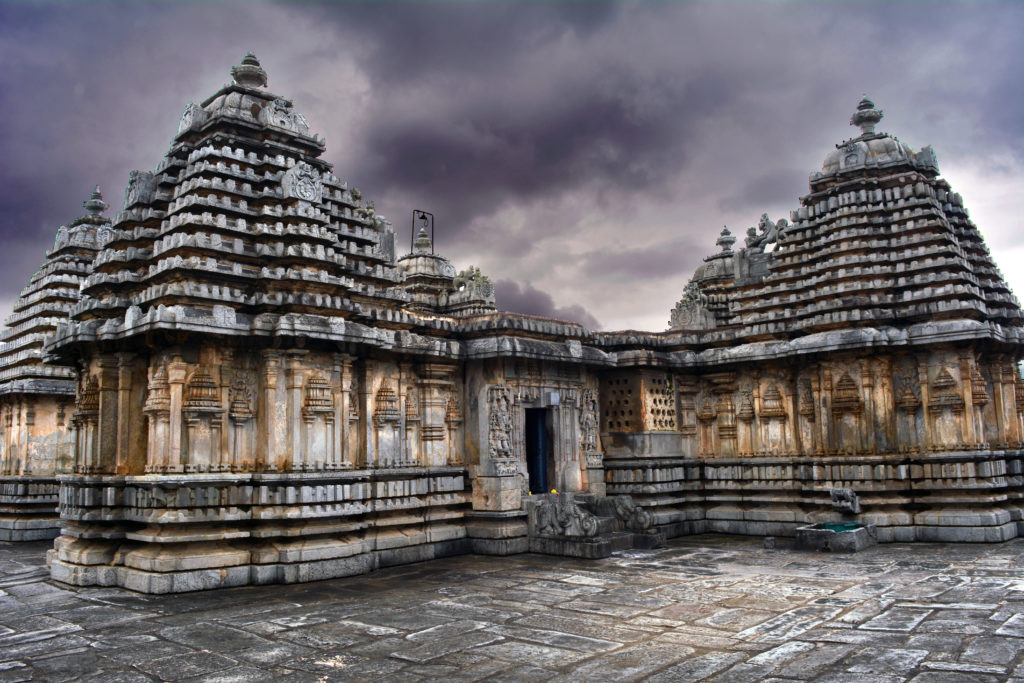
Built: 1113 CE, commissioned by merchant Kullahana Rahuta (Kalhana Rauta) and Sahajadevi
Deity: Lakshmidevi, with shrines for Kali, Vishnu and Shiva
Material: Soapstone / Chloritic schist
Architecture: Early Hoysala architecture, Chatushkuta (four-shrined) temple
See this: Four shrines around a common navaranga, enclosed courtyard, no raised jagati, distinctive Kadamba-Nagara style towers
Don’t miss this:
Giant Vetalas: Two enormous skeletal Vetala guardians at the entrance to the Kali shrine
Kali shrine: Fierce Mahakali/Shanta Kali, Vetala guardians, Bhuta imagery
Four shrines: Lakshmidevi, Kali, Vishnu, Boothanatha (Shiva)
Special architecture: Rare Chatushkuta plan, nine-shrine temple complex, unusual early Hoysala design
Towers: Kadamba-Nagara style vimanas, Lakshmi shrine’s distinctive tower
Ceilings: Tandaveshwara, ornate lotus and geometric ceiling carvings
Doorways: Gajalakshmi, Yoganasimha, Tandaveshwara, Bhuta figures
Pillars: 18 lathe-turned pillars, polished surfaces
Inscriptions: Old Kannada inscription naming Kullahana Rahuta and Sahajadevi
Special detail: Hoysala Sala emblem, perforated stone jali screens, makara-pranala
Look closely: Vetala faces, skeletal bodies, Bhuta figures, Kali’s attendants, miniature towers, doorframe sculptures and ceiling medallions
Special: One of the earliest surviving Hoysala temples — and dramatically different from later Belur/Halebidu temples. The giant Vetalas guarding Kali are the absolute must-see feature.
Approximate time to See Lakshmidevi Temple, Doddagaddavalli: 45–60 Mins.
Bucheshwara Temple, Koravangala — What to See
Built: 1173 CE, by Buchiraja (Buchi), during the reign of Hoysala King Veera Ballala II
Deity: Shiva
Material: Soapstone / Chloritic schist
Architecture: Hoysala architecture, Dvikuta (twin-shrine) temple
See this: Twin sanctums facing each other, large navaranga, open mandapa, three-tiered vimana, richly carved exterior
Don’t miss this:
Twin shrines: Shiva shrine and the unusual Surya shrine facing it
Surya sculpture: Surya with Aruna and seven horses, Chhaya figures, twelve Adityas in the torana
Famous sculptures: Gajendramoksha, Trivikrama, Vamana, Narasimha, Krishna lifting Govardhana, Ravana shaking Kailasa
Special pillars: 32 lathe-turned pillars, bell-shaped forms, finely carved beadwork
Ceilings: 13 lotus-carved ceiling panels in the mukhamandapa, nine-section navaranga ceiling
Doorways: Gajalakshmi, elaborate dvarapalas, elephants and richly carved doorframes
Bhairava shrine: Small independent Bhairava shrine within the temple complex
Inscriptions: Kannada inscription recording Buchiraja’s patronage and the temple’s association with the coronation of Veera Ballala II
Nearby temples: Ruined Govindeshwara and Nageshwara temples, built by Buchiraja’s brothers Govinda and Naka
Look closely: Surya’s seven horses, twelve Adityas, Gajendramoksha panel, dvarapalas, Sala emblem, ceiling lotuses and tiny epic scenes
Special: The Surya shrine facing the Shiva shrine is the standout feature — an unusual combination that makes Bucheshwara particularly interesting. Also see the three related Hoysala temples at Koravangala as a group: Bucheshwara, Govindeshwara and Nageshwara.
Approximate time to See Bucheshwara Temple, Koravangala: 1–1.5 Hrs.
Ishvara Temple, Arasikere — What to See
Built: c. 1220 CE, Hoysala King Narasimha II
Deity: Shiva / Kattameshwara
Material: Soapstone / Chloritic schist
Architecture: Hoysala architecture, Ekakuta (single-shrine) temple
See this: Unusually complex star-shaped plan, 16-pointed star-shaped open mantapa, asymmetrical star-shaped shrine, five-tiered vimana
Don’t miss this:
16-pointed mantapa: The temple’s defining feature, one of the most unusual Hoysala architectural plans
Domed ceiling: Deeply carved concentric ceiling with inverted lotus, giving a timber-like appearance
Star-shaped shrine: Three different types of star projections create an unusually complex exterior plan
Sculptures: Around 120 wall-panel images, Shiva, Vishnu, Devi and mythological figures
Pillars: Lathe-turned pillars, polished surfaces, elephant carvings at pillar bases
Doorways: Elaborate dvarapalas and richly carved doorframes
Vimana: Surviving five-tiered tower and sukanasi
Inscriptions: Old Kannada inscriptions, including records dating to around 1220 CE; hero stones within the complex
Nearby remains: Ruined double Shiva temple, Sahasrakuta Jinalaya with its thousand-Jina image
Look closely: 16-point geometry of the mantapa, domical ceiling, inverted lotus, 120 wall panels, dvarapalas, elephant-base carvings and Old Kannada inscriptions
Special: Arasikere is an architecture-first Hoysala temple — modest in size but exceptionally complex in plan. Its 16-pointed open mantapa and asymmetrical star-shaped shrine are the real reason to visit, rather than simply looking for the larger sculptural programme of Belur or Halebidu.
Approximate time to See Ishvara Temple, Arasikere: 1–1.5 Hrs.
Shravanabelagola (Vindhyagiri Hill) — What to See
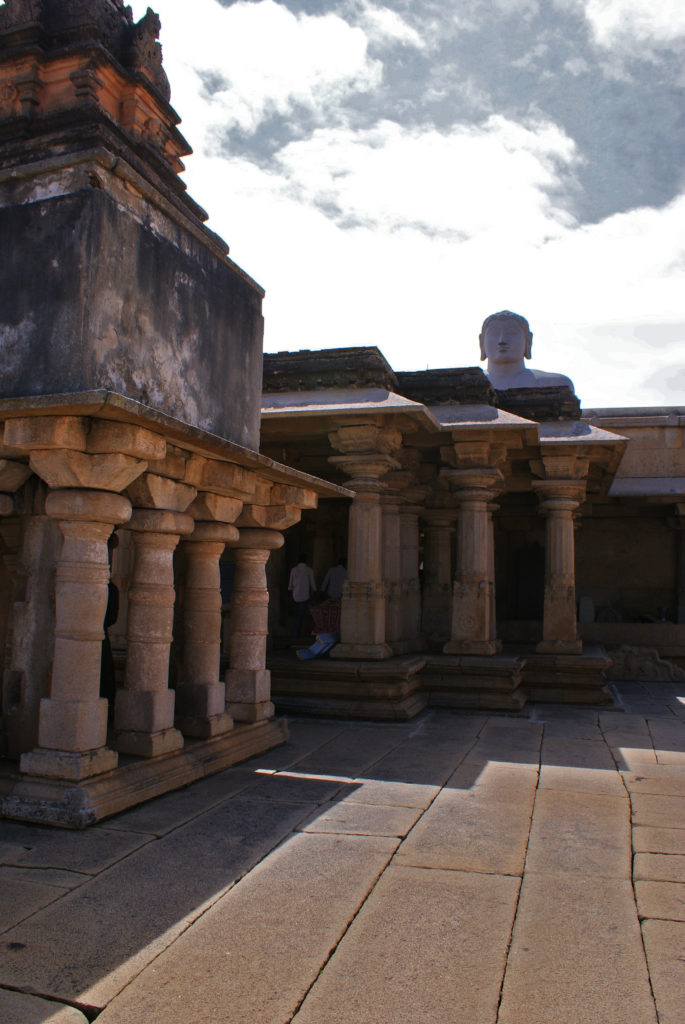
Established: Major Jain centre from the Ganga period; Gommateshwara consecrated in 981 CE by Chavundaraya
Deity: Bahubali / Gommateshwara
Tradition: Digambara Jainism
Material: Granite
Setting: Vindhyagiri Hill, 600+ rock-cut steps
See this: 58.8-ft monolithic Gommateshwara, rock-cut ascent, hilltop Jain complex, basadis, mantapas, pillars and inscriptions
Don’t miss this:
Gommateshwara: 58.8-ft monolith, kayotsarga posture, creepers around legs, serene expression
Akhanda Bagilu: Massive rock-cut gateway, Gajalakshmi, Bahubali and Bharata figures
Odegal Basadi: Largest basadi on Vindhyagiri, images of Rishabhanatha, Neminatha and Shantinatha
Siddhara Basadi: Small shrine with seated Siddha and inscribed pillars
Chaubees Jinalaya: Shrine containing the 24 Tirthankaras
Jaruguppe Parshwanath Basadi: Jain shrine dedicated to Parshvanatha
Brahmadeva Mantapa: Pillared hall with nine carved ceiling panels
Tyagada Brahmadeva Pillar: Ornate free-standing pillar, one of Vindhyagiri’s major monuments
Gullikayi Ajji: Distinctive female figure holding a small gourd
Siddhar Gundu: Rock and Jain inscriptions associated with the hill’s ascetic tradition
Chamundaraya Paduke: Footprint monument associated with Chavundaraya
Inscriptions: Old Kannada inscriptions, Boppanna inscription, Chavundaraya inscription, inscriptions on Siddhar Gundu and numerous Jain memorial records
Look closely: Gommateshwara’s creepers and facial details, Gajalakshmi at Akhanda Bagilu, Tirthankara images, inscribed pillars, rock inscriptions, miniature carvings and ceiling panels
Special: Vindhyagiri is much more than the Gommateshwara statue — the hill preserves a remarkable concentration of Jain monuments and inscriptions spanning centuries. Shravanabelagola as a whole has 800+ inscriptions, making it one of India’s most important centres for the study of Jainism and Old Kannada epigraphy.
Approximate time to See Shravanabelagola (Vindhyagiri Hill): 2.5–3 Hrs.
Shravanabelagola (Chandragiri Hill) — What to See
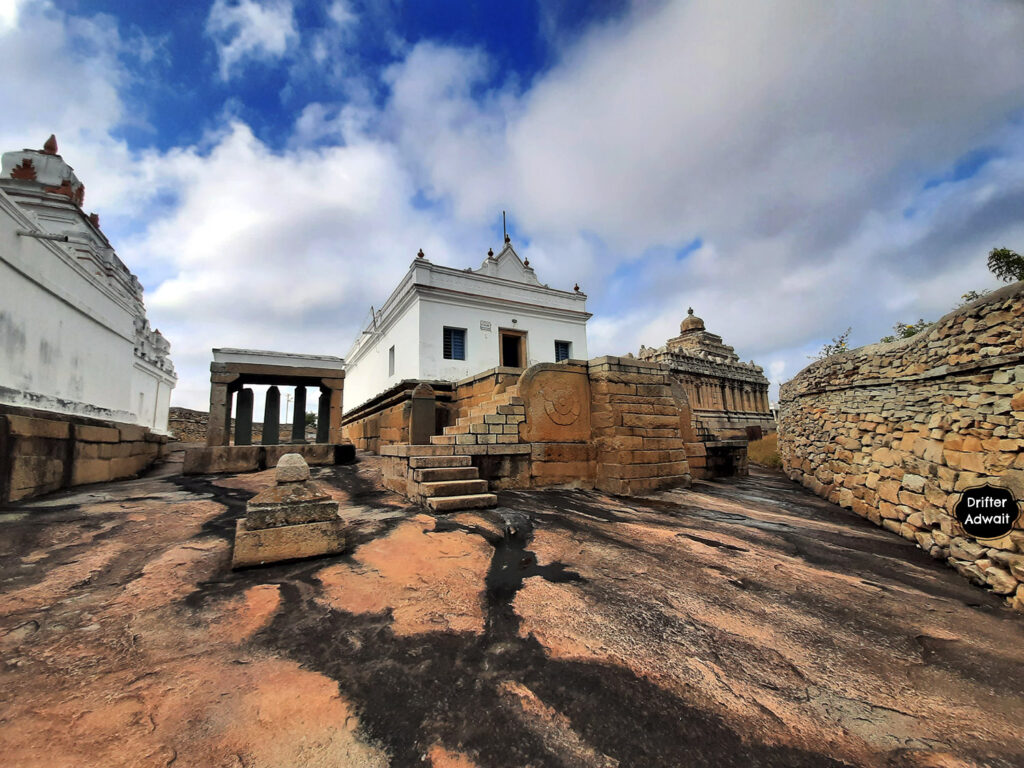
Established: Jain sacred centre from at least the early centuries BCE; major monastic activity and monuments developed from the early medieval period
Tradition: Digambara Jainism
Material: Granite, soapstone and brick
Setting: Chandragiri Hill, associated with Bhadrabahu and Chandragupta Maurya
See this: Cluster of ancient Jain basadis, monk memorials, caves, manastambhas, rock inscriptions and nishidhi memorials
Don’t miss this:
Chandragupta Basadi: Perforated stone screens, miniature narrative carvings, Parshvanatha, Padmavati and Kushmandini
Chavundaraya Basadi: 982 CE, dedicated to Neminatha, Dravidian-style architecture, ornate pillars and ceiling
Parshvanatha Basadi: 18-ft monolithic Parshvanatha, seven-headed serpent hood, 65-ft Manastambha
Kattale Basadi: Largest basadi on Chandragiri, Adinatha image, large mandapa, Padmavati
Shantinatha Basadi: Richly carved exterior, distinctive Hoysala-period architecture
Chandraprabha Basadi: Chandraprabha with Shyama and Jwalamalini, early Jain imagery
Majjigana Basadi: Anantanatha shrine, detailed exterior carving
Shasana Basadi: Named for the prominent inscription at its entrance
Terina Basadi: Bahubali image, distinctive chariot-like structure in front
Eradukatte Basadi: Compact Jain shrine with distinctive architectural arrangement
Bhadrabahu Cave: Associated by Jain tradition with Bhadrabahu and Chandragupta
Chandragupta footprints: Jain tradition associates the sacred hill with Chandragupta Maurya’s final years and sallekhana
Nishidhi memorials: Memorial stones commemorating Jain monks, nuns and lay devotees who undertook sallekhana
Manastambhas: Marasimha’s Manastambha and the Parshvanatha Basadi pillar
Mahanavami Mantapa & Gangaraja Mantapa: Historic pillared structures on the hill
Inscriptions: Bhadrabahu inscriptions, Chandragupta-related records, Old Kannada inscriptions, memorial/nishidhi inscriptions, royal and monastic records spanning several centuries
Look closely: Perforated screens at Chandragupta Basadi, tiny narrative carvings, Tirthankara images, serpent hood of Parshvanatha, Manastambha carvings, rock inscriptions and nishidhi stones
Special: Chandragiri is not simply a collection of Jain temples — it is essentially a historic Jain monastic and memorial landscape. Of the 106 Jain memorials traditionally recorded at Shravanabelagola, 92 are on Chandragiri, making the hill particularly important for understanding Jain ascetic traditions and epigraphy.
Approximate time to See Shravanabelagola (Chandragiri Hill): 2–2.5 Hrs.